

 info@silverliningfloorcare.co.uk



Learn how to safely clean natural stone floors without etching or staining. From daily care to what to avoid.
Read more

When a wood floor suffers water damage, the first instinct is often to assume the whole floor needs replacing. That was the concern in this Angel, London flat, where water exposure had caused an engineered herringbone floor to lift, gap, and come away from the subfloor. On inspection, however, it became clear that a full replacement was not the only option. Instead, we carried out a targeted restoration designed to preserve as much of the original floor as possible. The process involved lifting the affected boards carefully, preparing and protecting the subfloor, reinstating salvageable sections, sourcing matching replacements where needed, and refinishing the whole area with an oil-based primer and satin lacquer. The result was a stable, visually cohesive floor that avoided the added cost and disruption of full replacement.
Case Overview: Water Damage to an Engineered Herringbone Floor
When a wood floor suffers water damage, the first question is usually simple: can it be saved, or does it all need to come up?
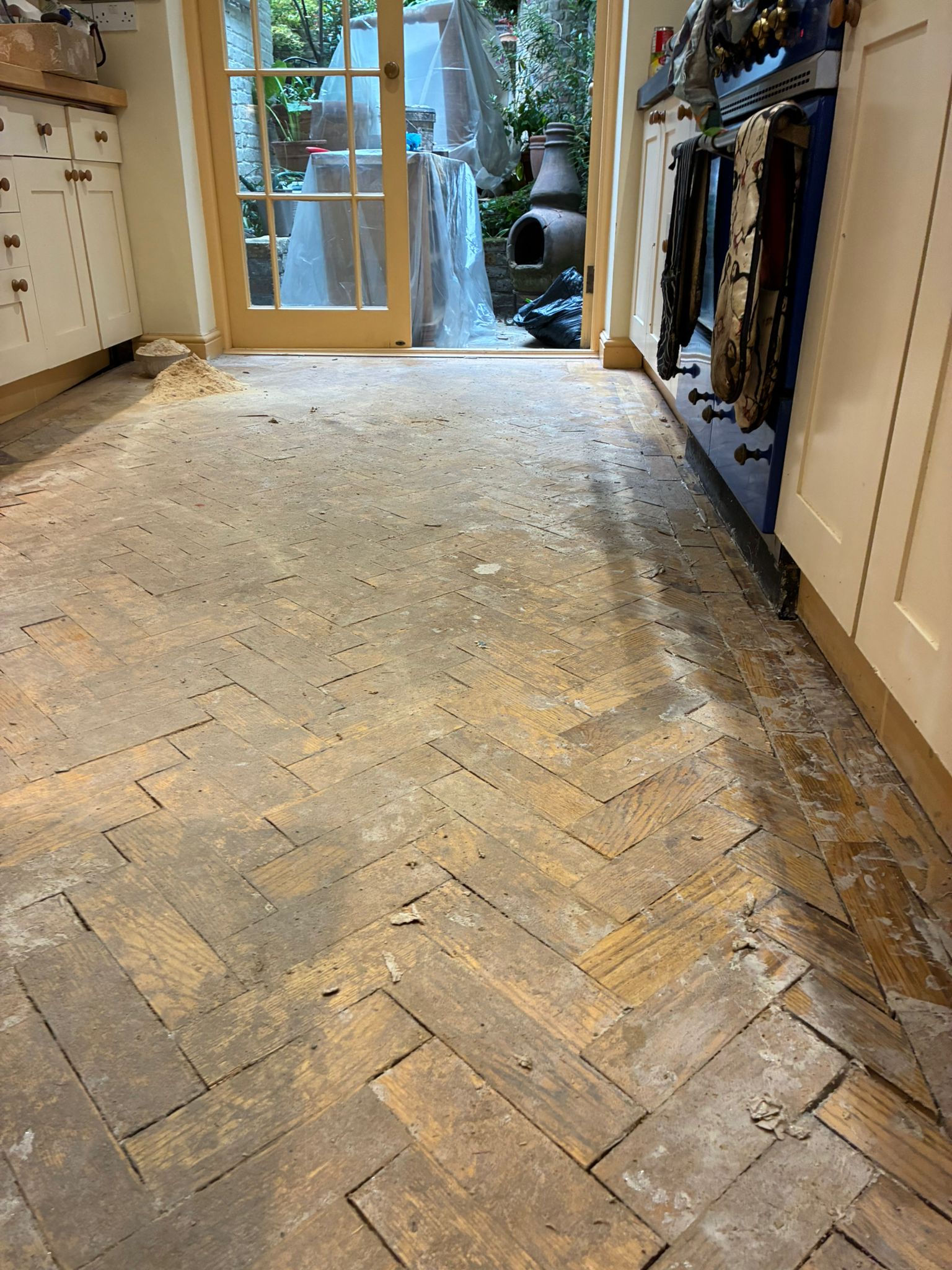
That was the situation in this Angel, London flat, where water damage had affected an engineered wood herringbone floor in the open-plan kitchen and dining area. Boards had lifted, gaps had opened across the pattern, and sections of the floor had started to come away from the subfloor. At first glance, it looked like a full replacement job.
After a detailed inspection, we took a different route. Rather than removing the entire floor, we carried out a targeted restoration designed to preserve as much of the original material as possible, stabilise the floor properly, and return the room to a usable, finished condition. It was not a case of chasing a “like new” result at any cost. It was about making the right decision for the floor, the property, and the client.
If you are dealing with something similar, this case study shows what wood floor water damage can look like in practice, how the restoration process works, and why early action makes such a difference. For broader support on damaged timber floors, see our wood floor restoration service.
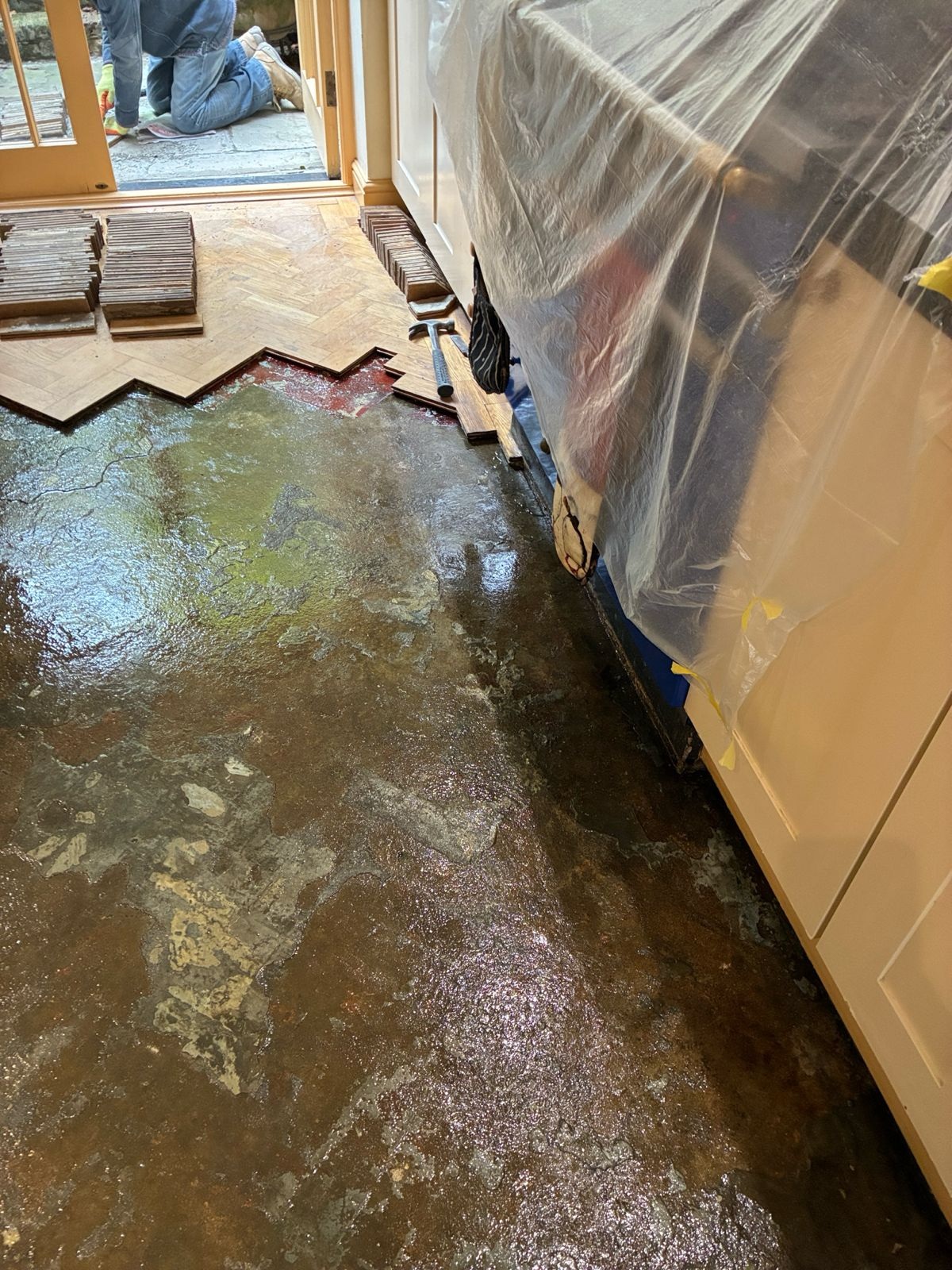
The Problem: Wood Floor Water Damage
Water damage on wooden floors is rarely just a surface issue. Once water has soaked into the boards and started penetrating the wood, the floor can begin to move, swell, lift, or separate. In engineered wood floor installations, the problem often becomes more serious when the bond between the boards and the subfloor starts to fail.
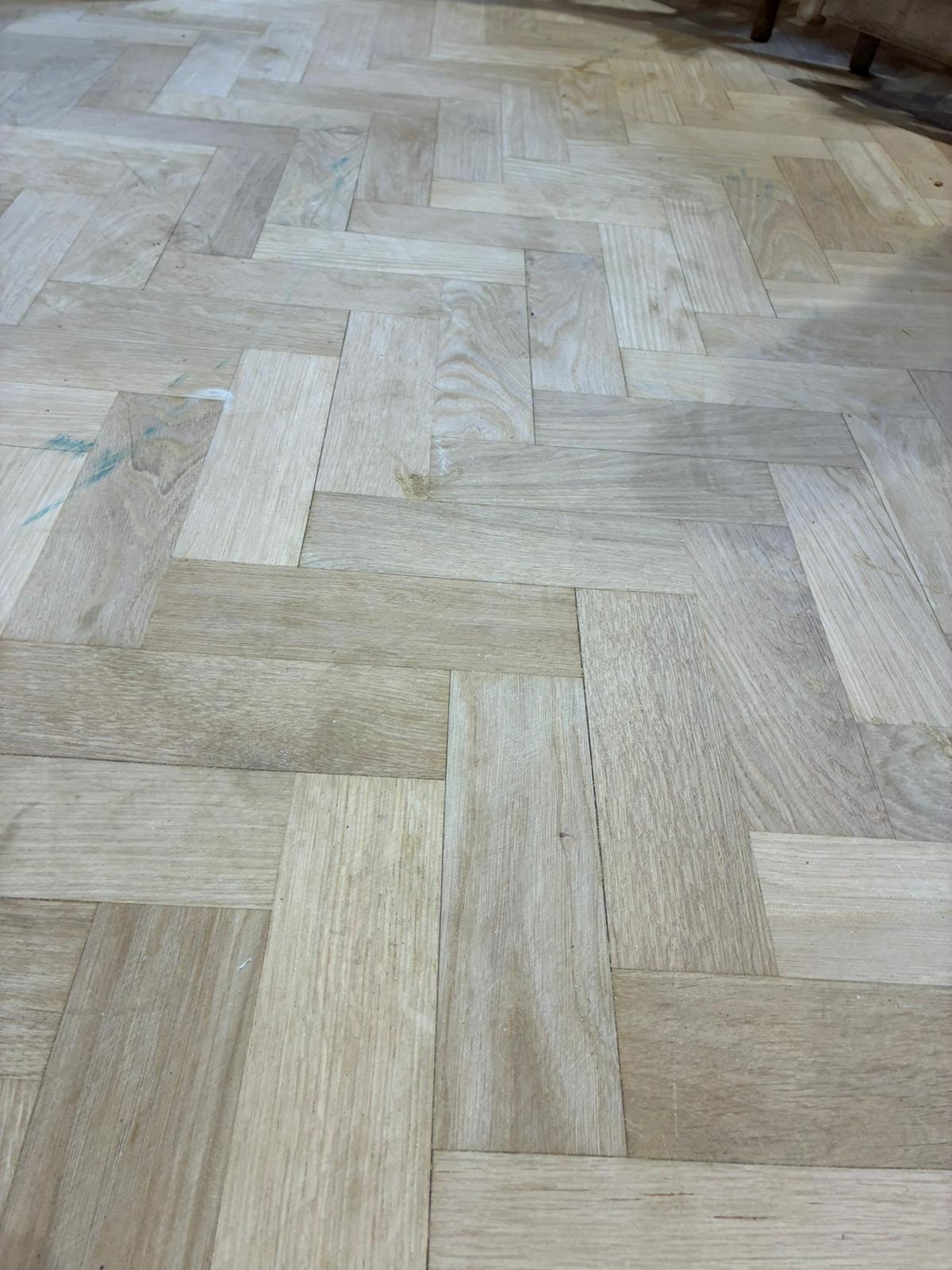
In this property, the engineered wood floor had lifted in multiple places. Boards were no longer securely fixed, and visible gaps had formed across the herringbone layout. The floor had lost stability, which meant this was no longer just about appearance. It was a structural flooring issue as well.
That matters because water-damaged wooden floors often worsen if left too long. What starts as light water exposure can lead to warped planks, failed adhesive, subfloor deterioration, mould risk, and more expensive restoration work later. The longer moisture remains in the flooring and subfloor, the greater the chance of damage spreading deeper into the wood.
For homeowners, the real concern is not only whether the floor looks damaged. It is whether the floor will hold, whether the affected area can be repaired safely, and whether the cost of restoration still makes sense compared with a new floor.
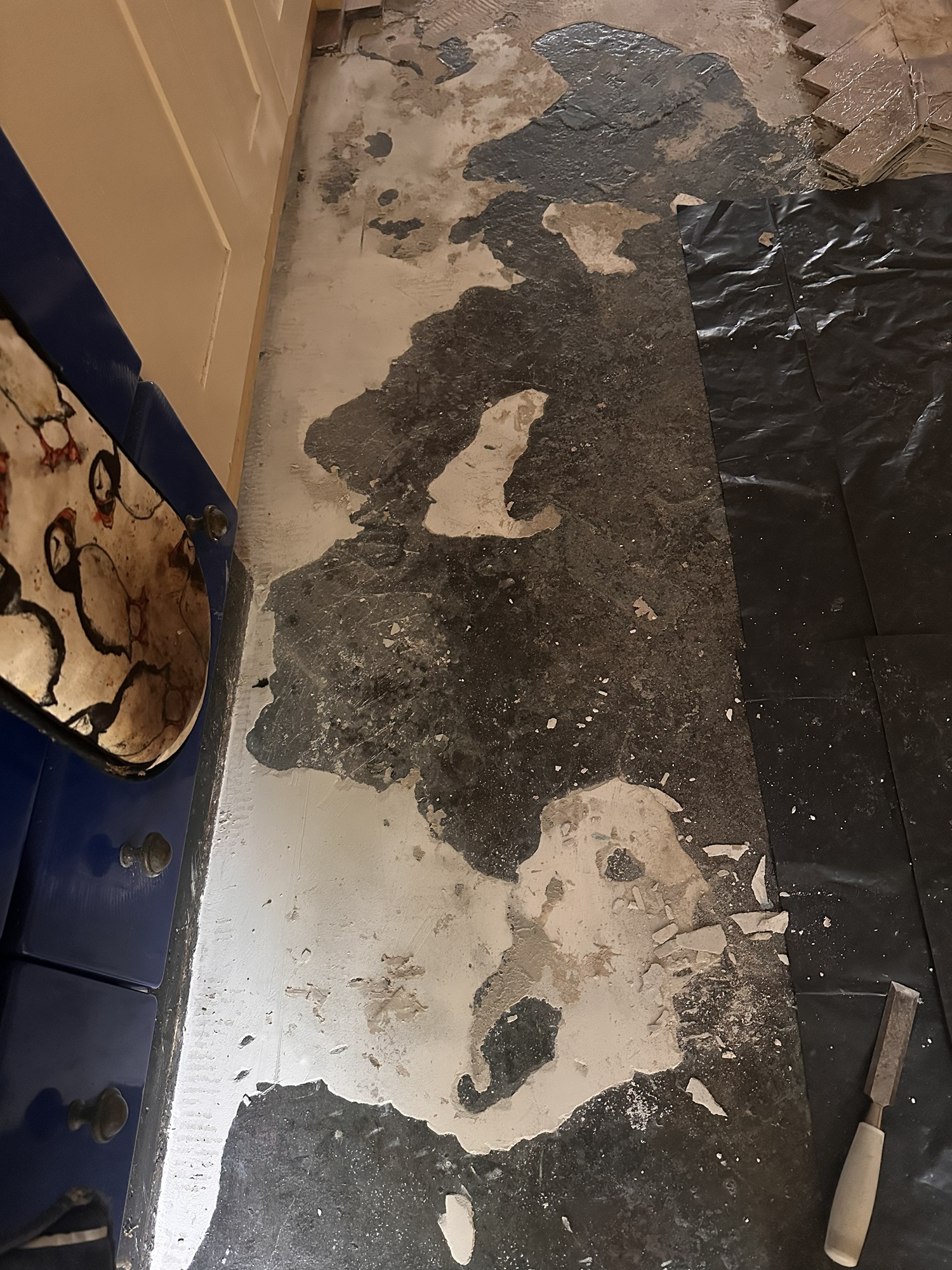
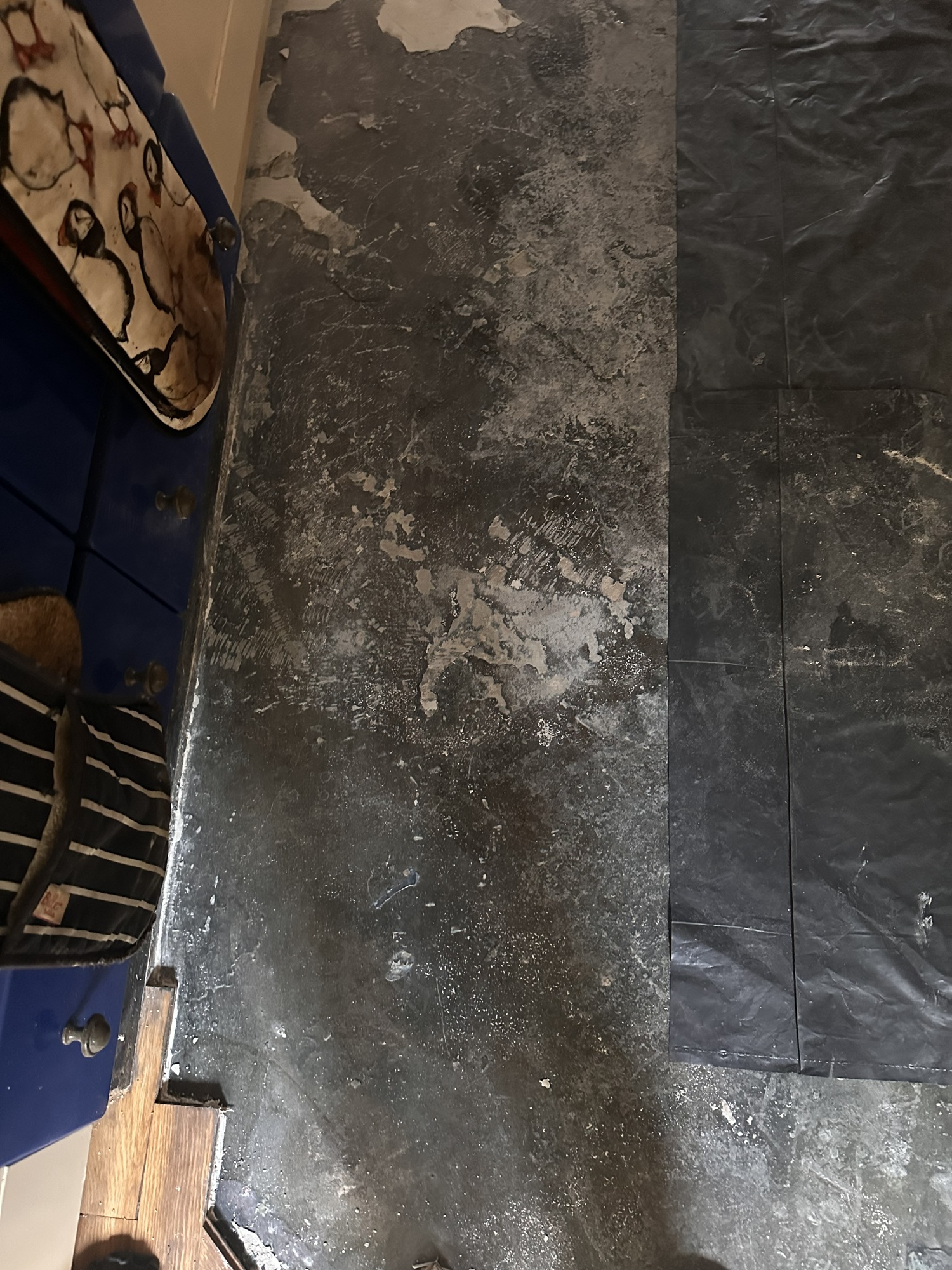
Assessing the Damage Properly
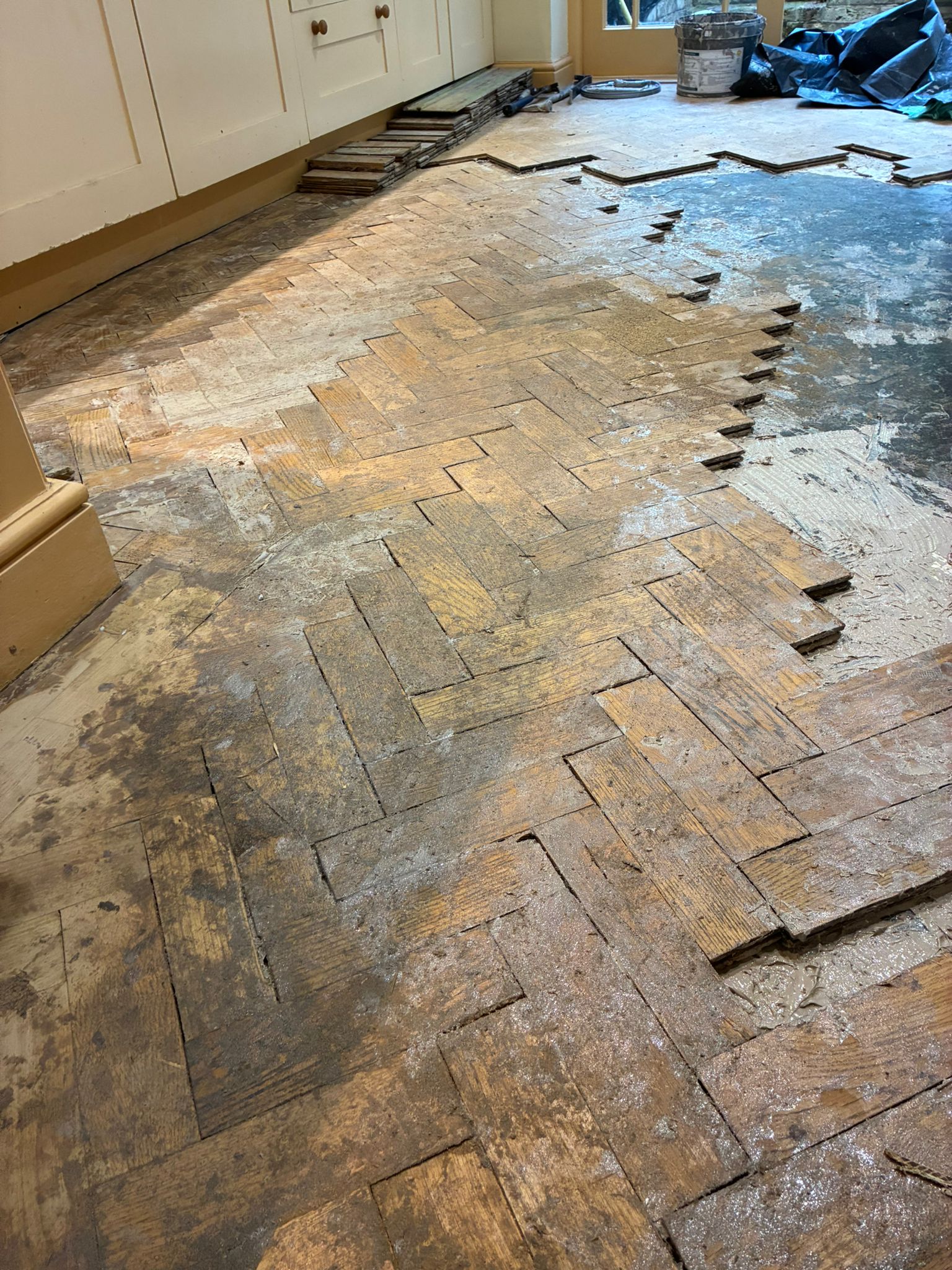
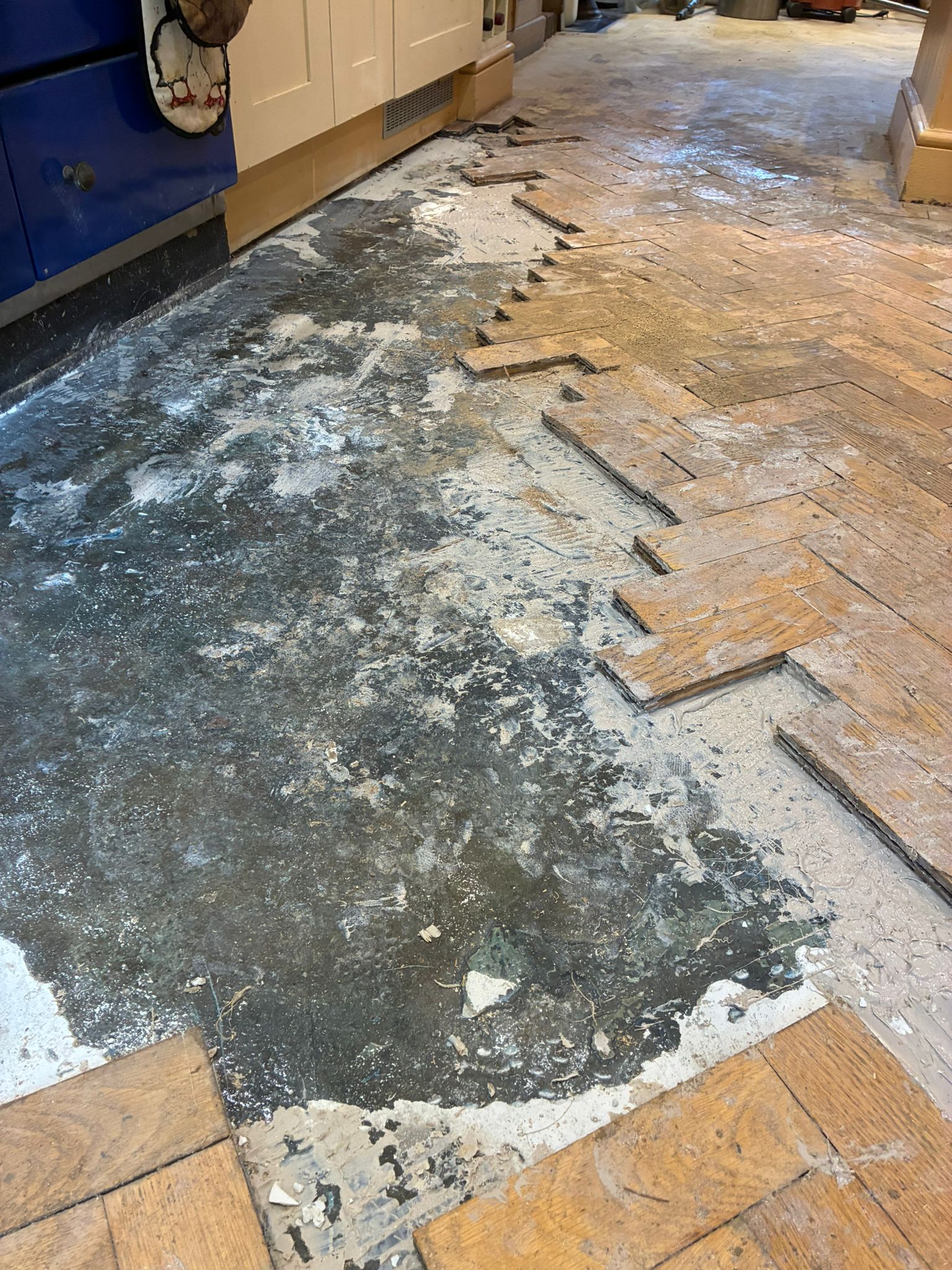
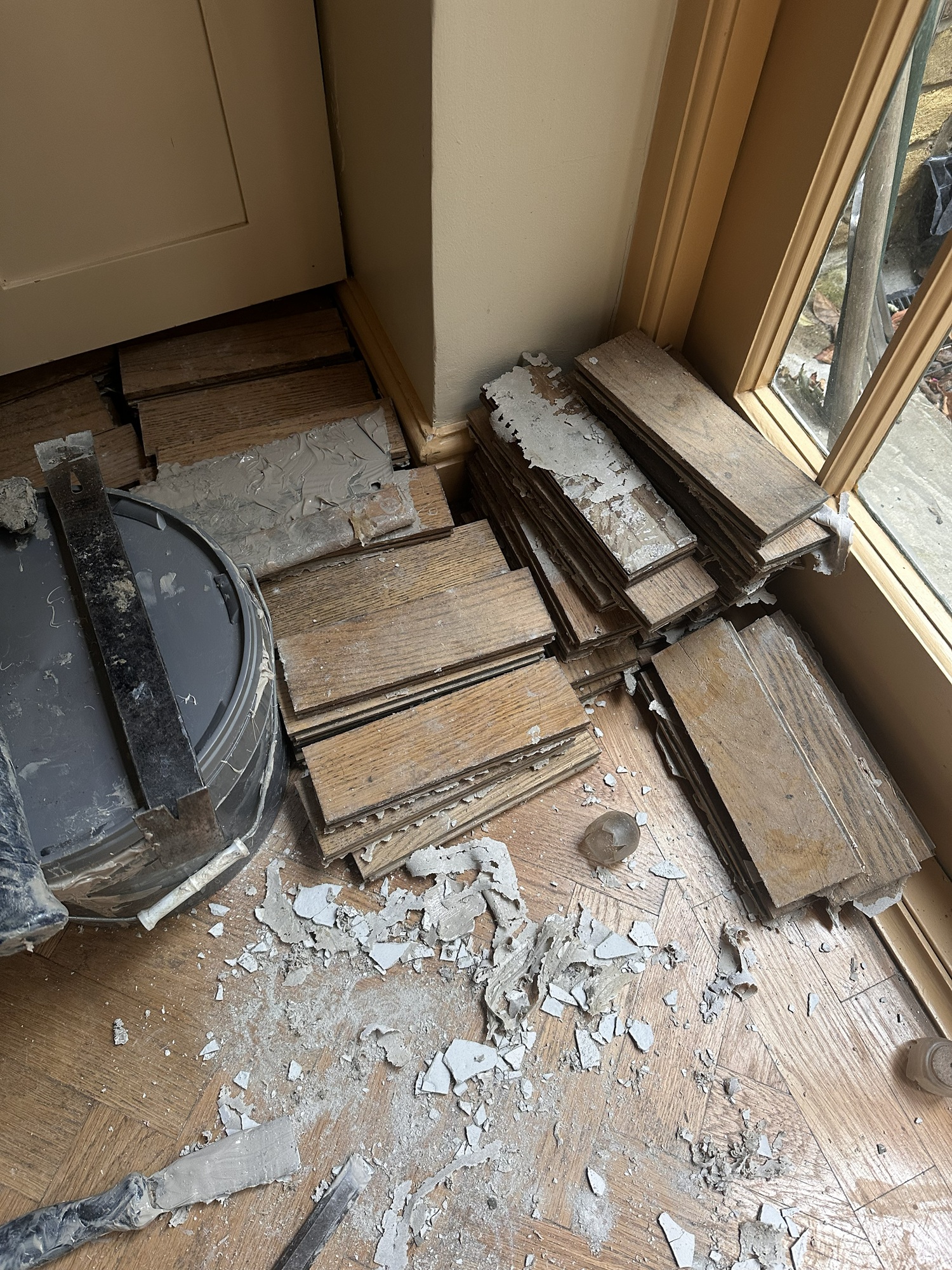
We began with a full inspection of the damaged floors and the surrounding area. The goal at this stage was to understand the extent of the water damage, identify whether the subfloor had been affected, and decide whether restoration would be realistic.
We assessed the floor for:
The key finding was that the problem went beyond visible water stains. The floor had lost its bond with the subfloor, which meant a cosmetic fix would not have been enough. In many cases like this, full replacement is the safest recommendation. Here, however, there was a realistic route to restore the floor, provided the damaged area was handled carefully and the subfloor was prepared properly.
This is where professional judgement matters. A DIY approach may focus on removing water stains or sanding visible marks, but if the flooring and subfloor are still compromised, the repair will not last. For more on sanding and refinishing options, see our floor sanding services.
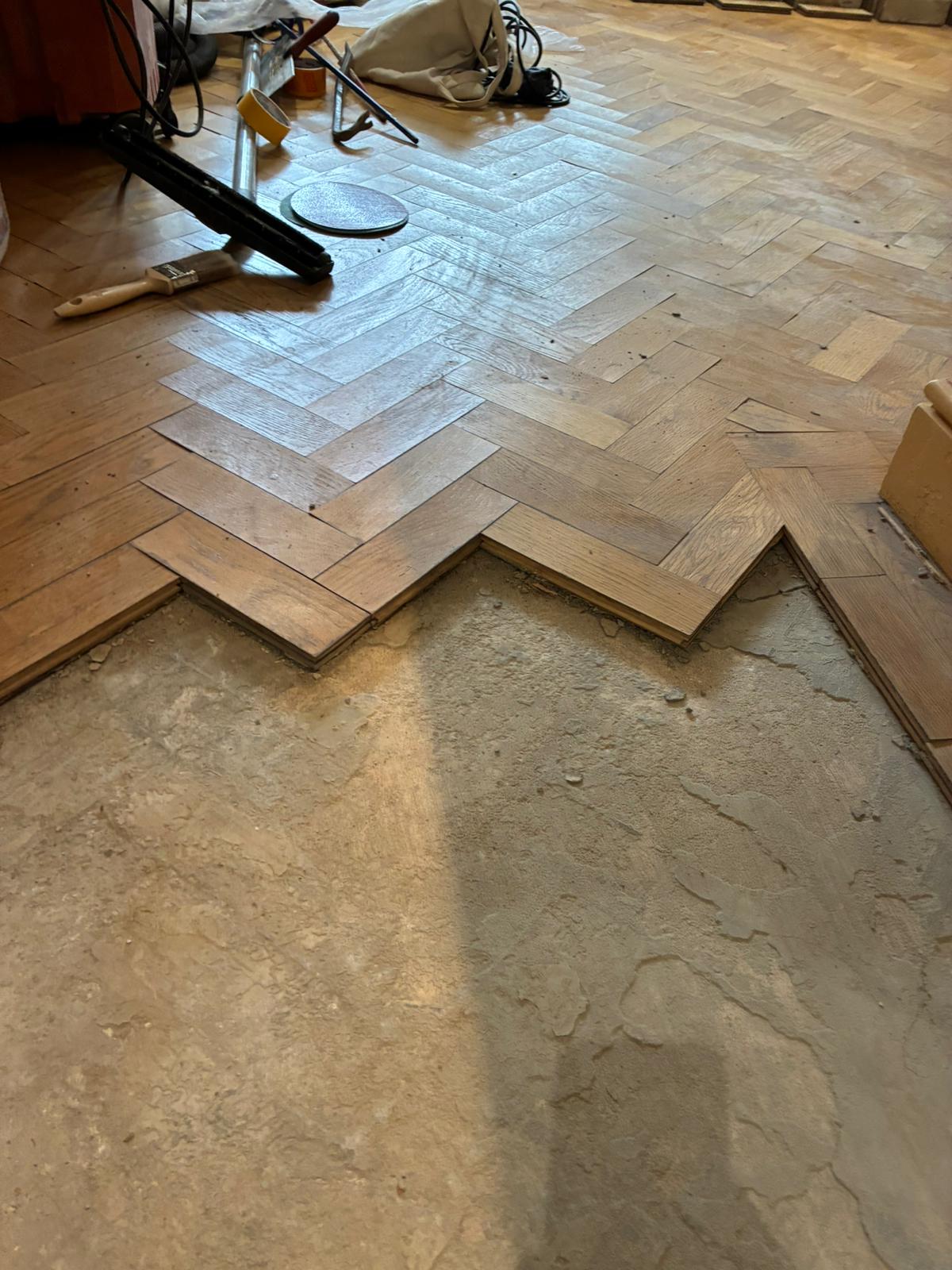
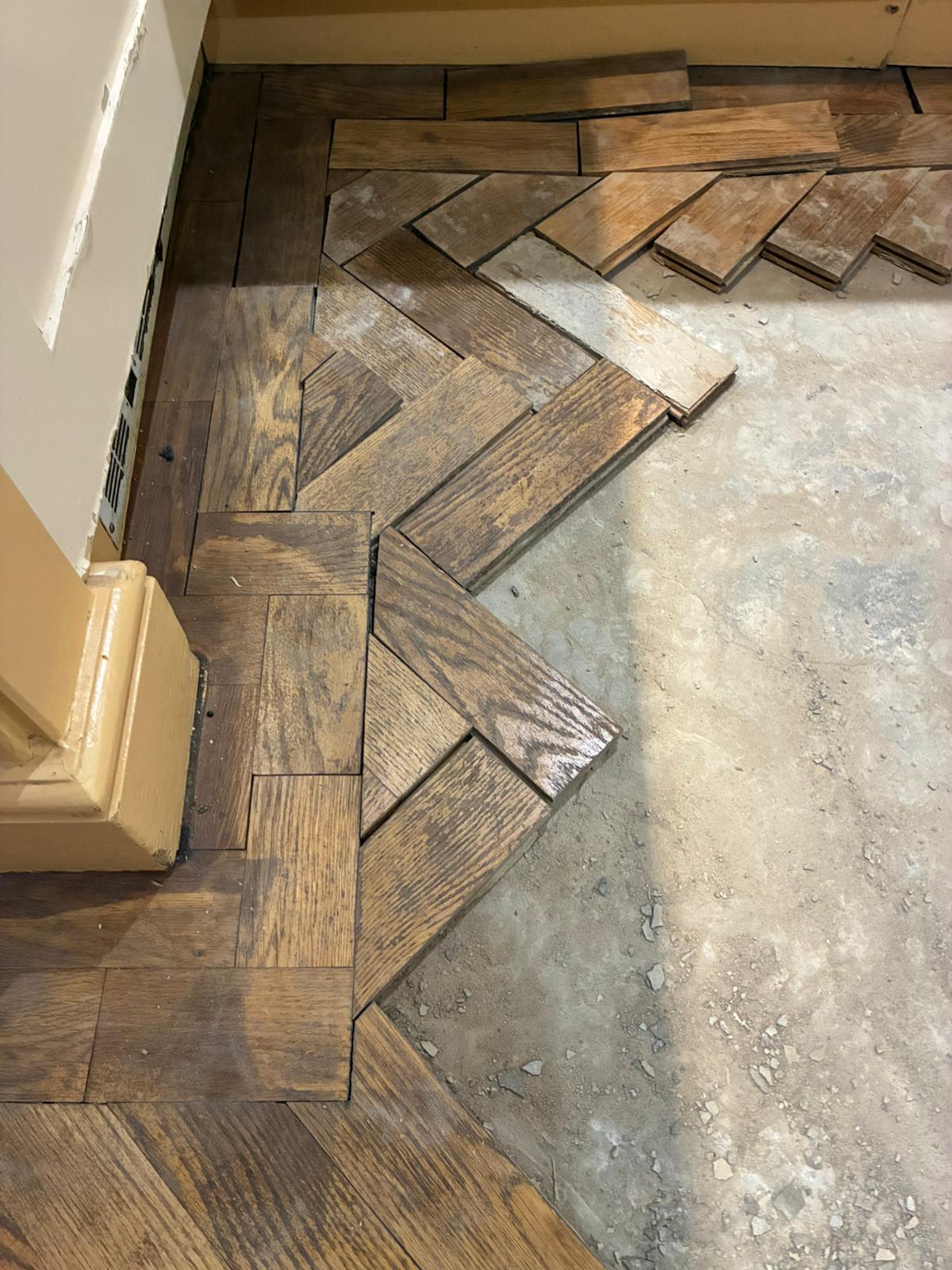
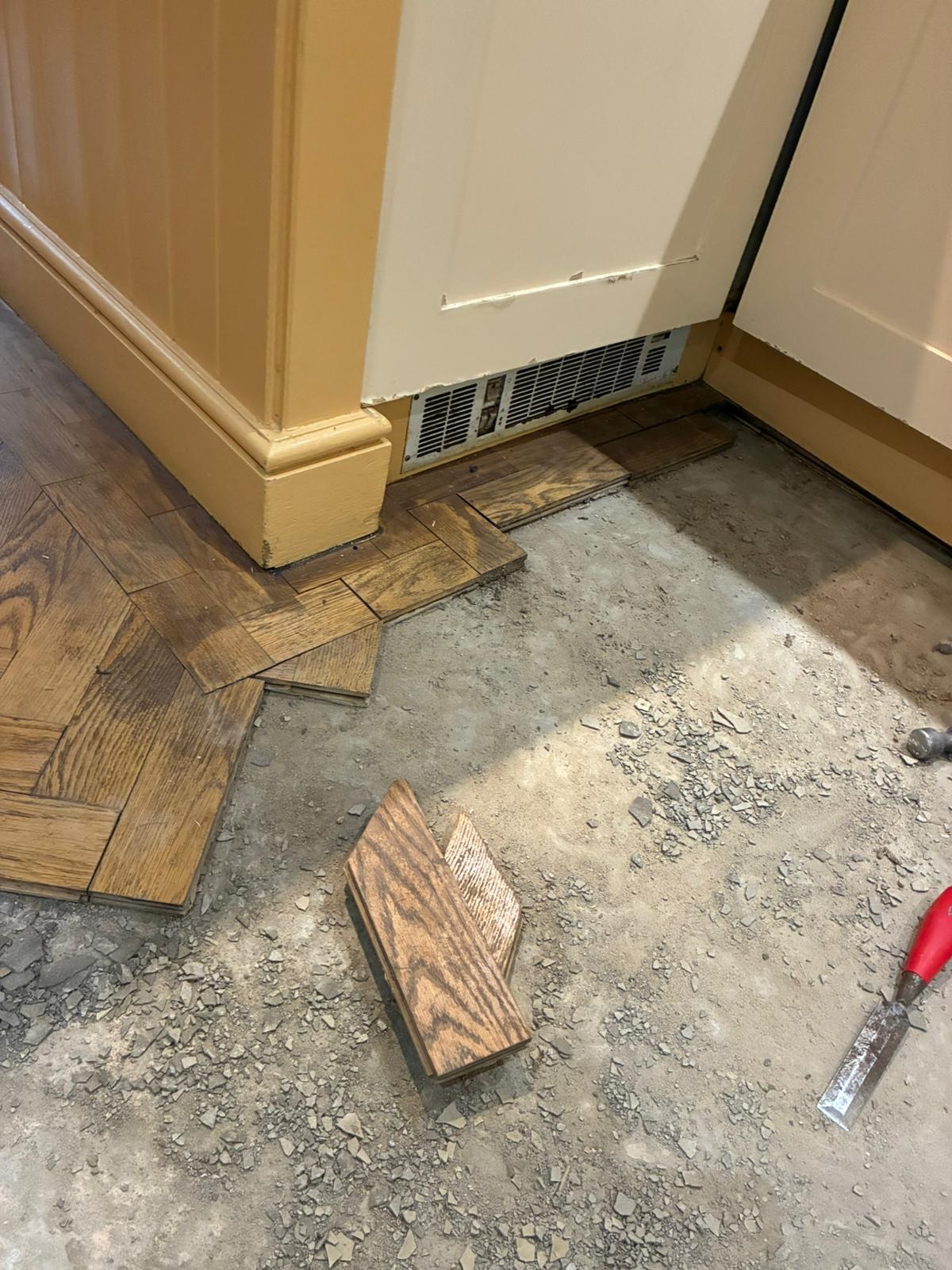
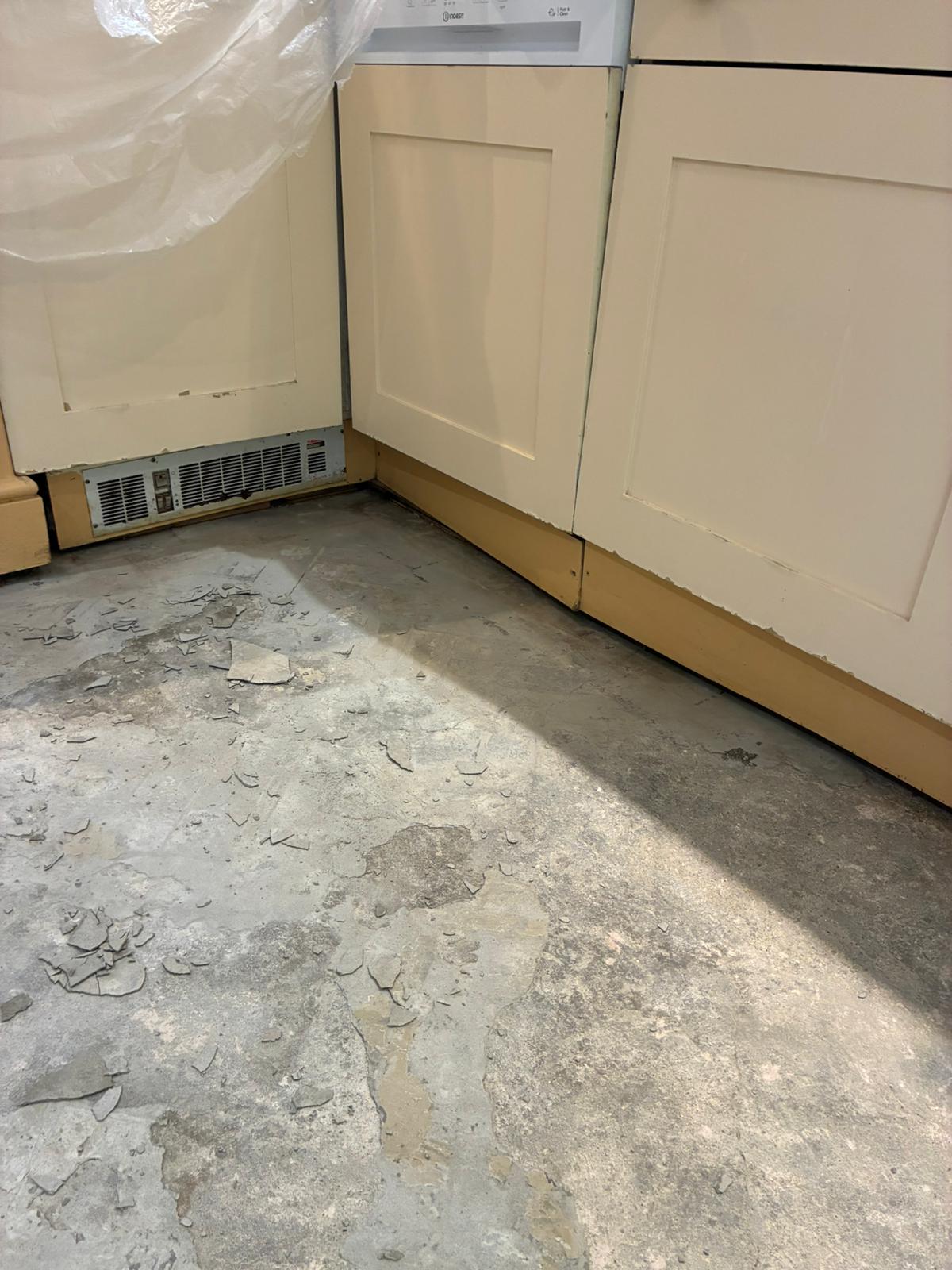
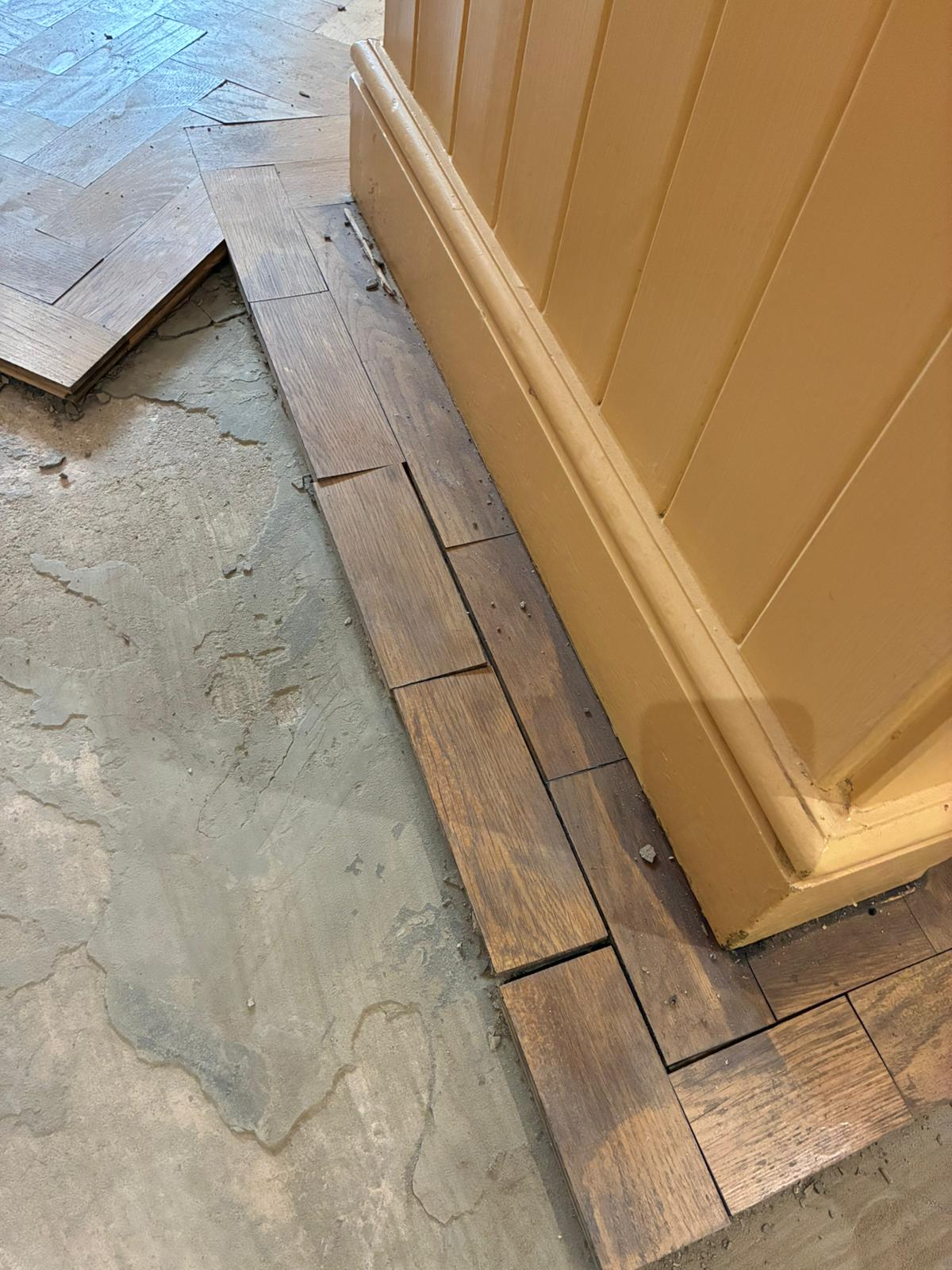
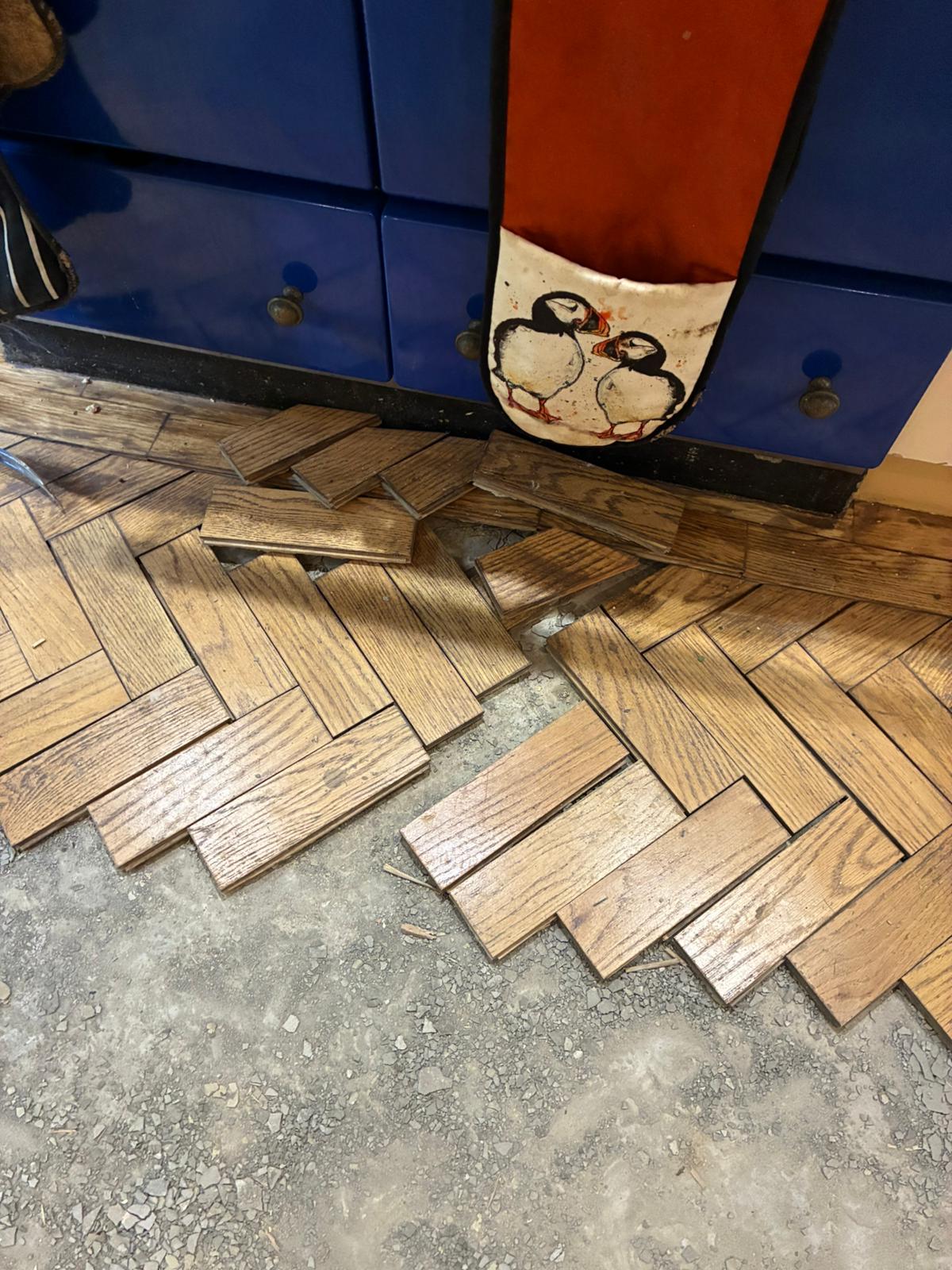
How the Floor Was Restored
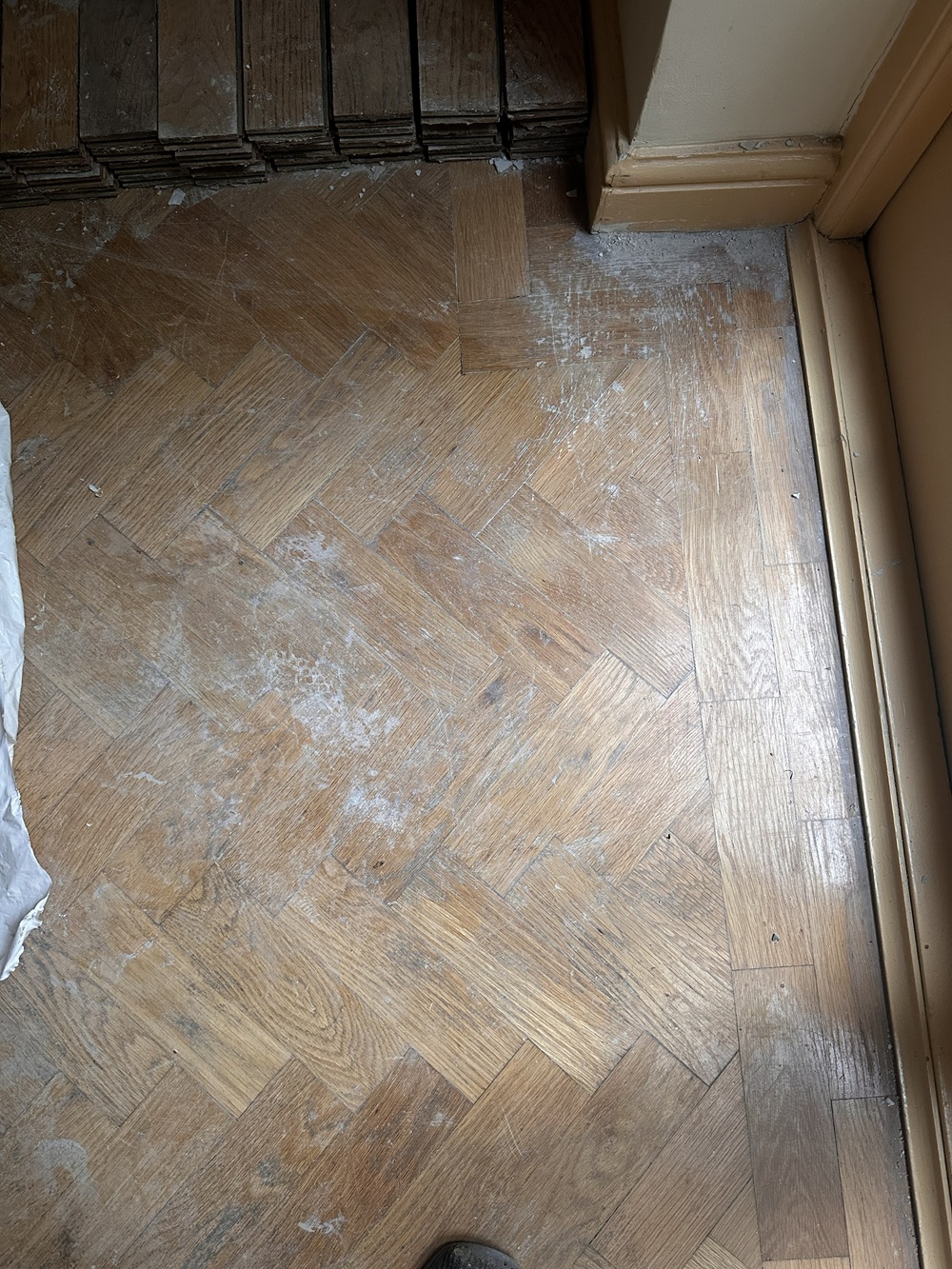
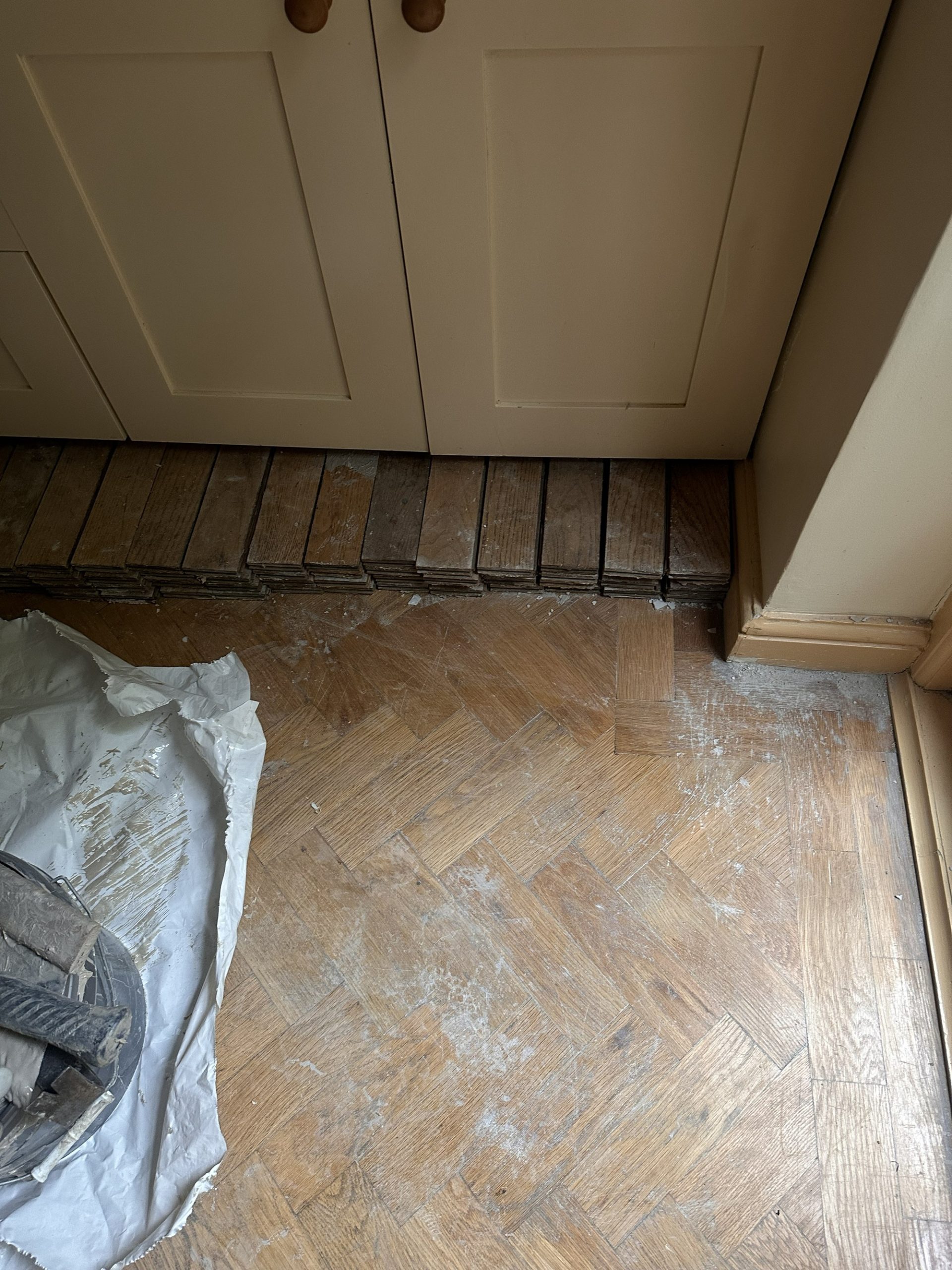
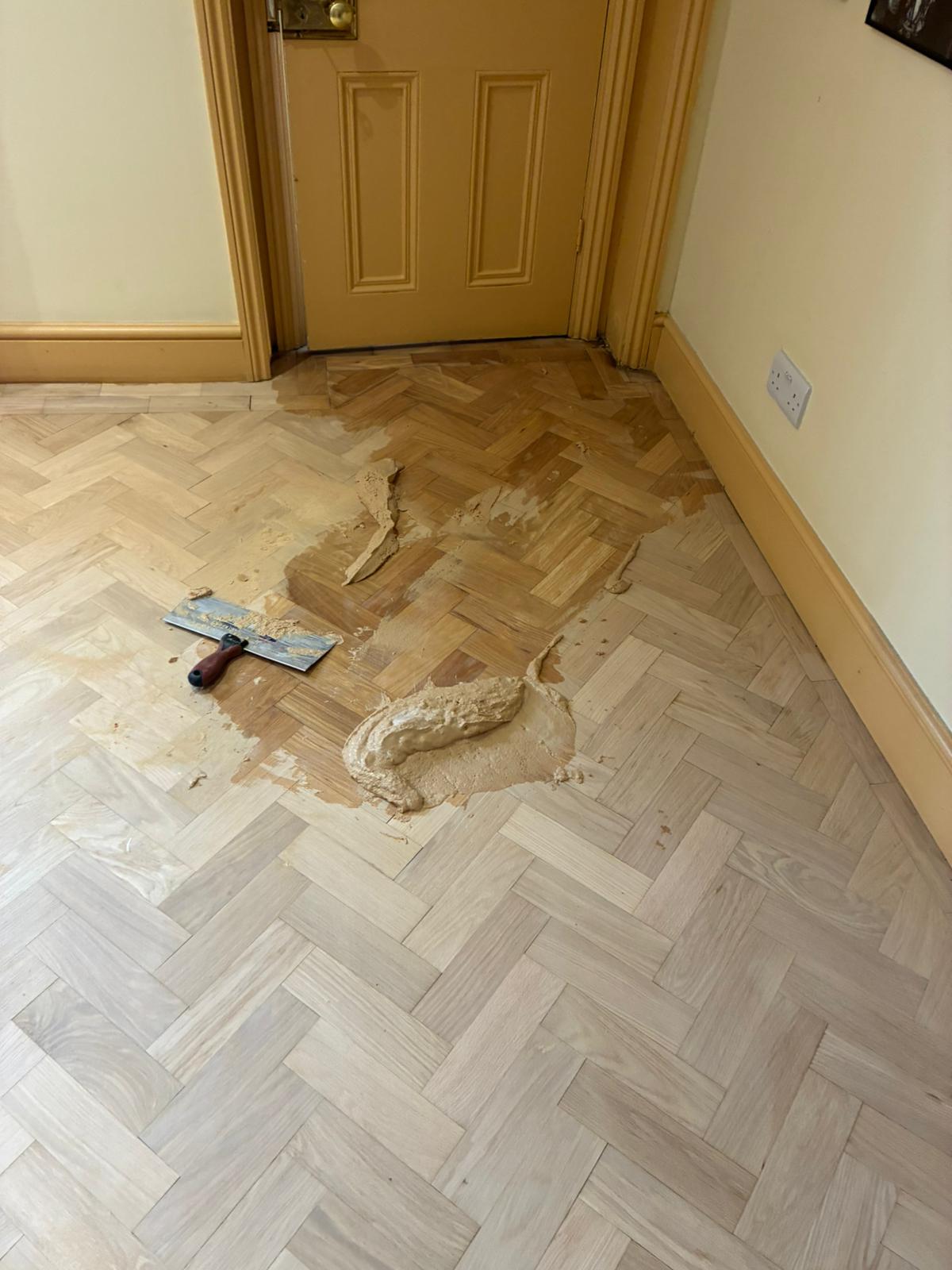
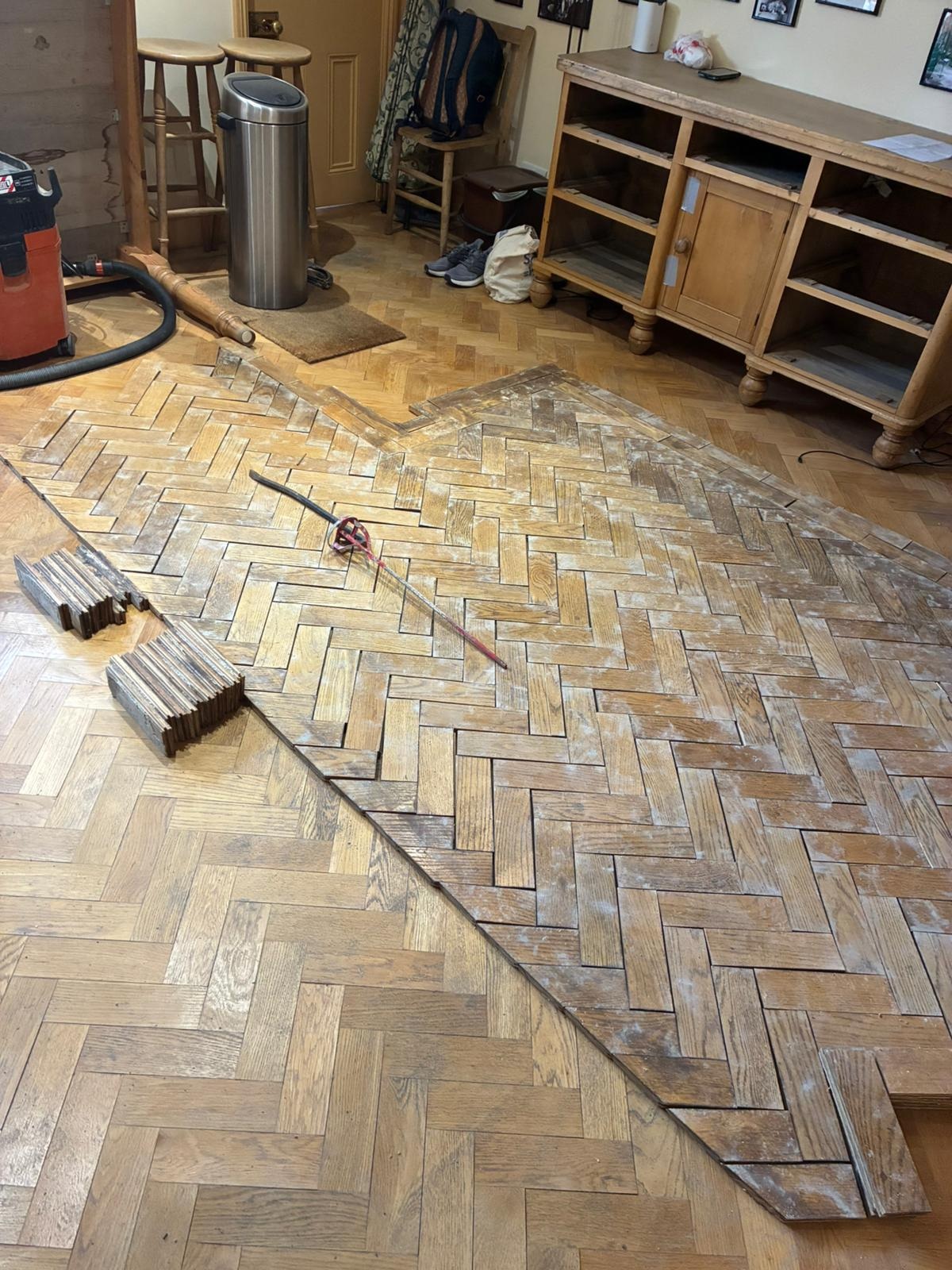
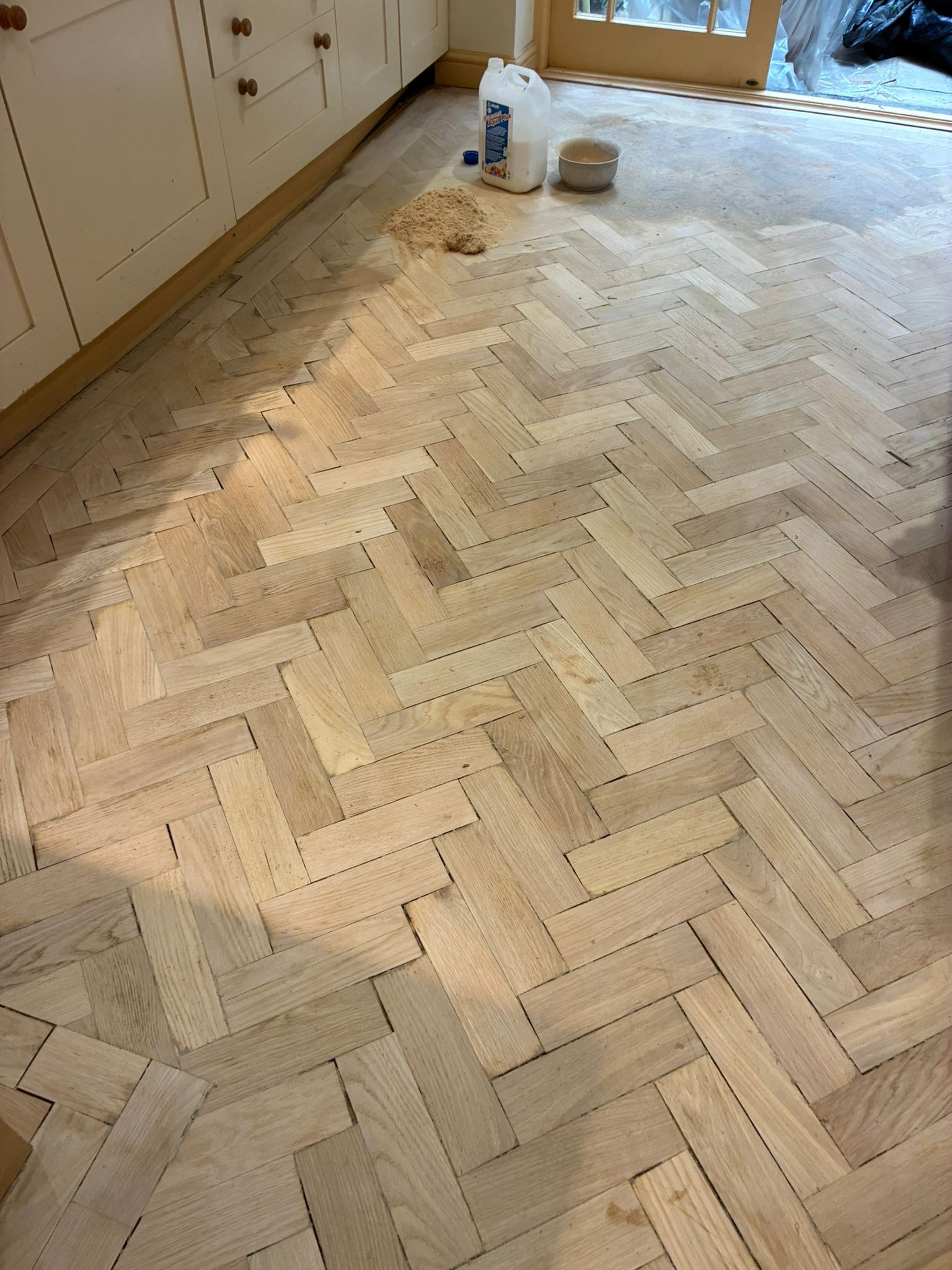
There was no standing water left by the time we were called in, but the damage caused by earlier water exposure was clear. The first step was to lift the affected area carefully rather than strip out the entire floor. Each plank had to be preserved in sequence so the original herringbone pattern could be reconstructed as accurately as possible.
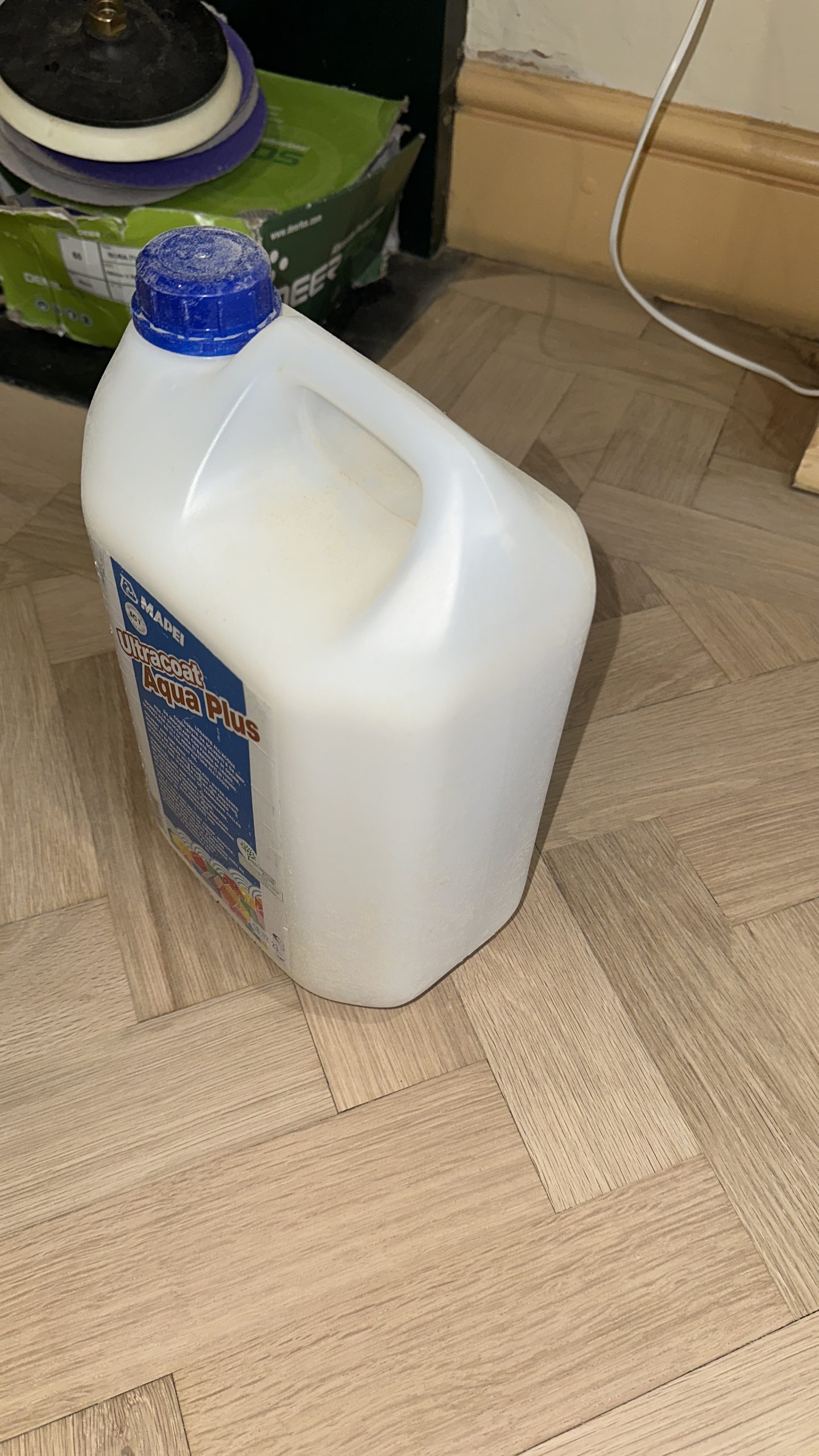
Before any boards could go back down, the subfloor had to be made sound. We ensured the base was dry, applied a damp proof membrane, and carried out levelling work where needed. This stage is not the most visible part of a water damage repair, but it is one of the most important. If the base is not right, the floor will continue to move and the restoration will fail.
Once the floor was ready, we reinstalled the original boards where possible, glued them back into position, and rebuilt the herringbone edges. Because the wood had already shifted due to water damage, some movement and some gaps were unavoidable. We were clear about that from the outset.
Where boards could not be reused, we sourced matching replacement sections to keep the floor visually consistent. That balance matters in older or carefully styled interiors. You are not just repairing damaged flooring. You are trying to respect the character of the room as well.
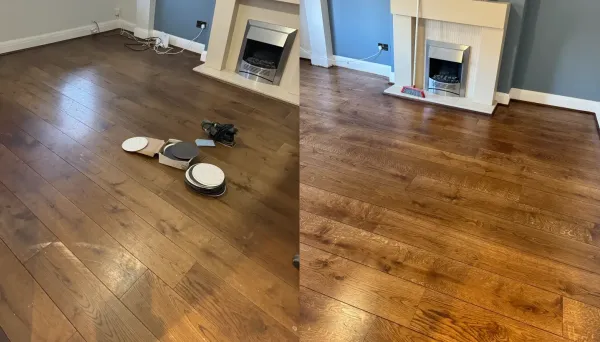
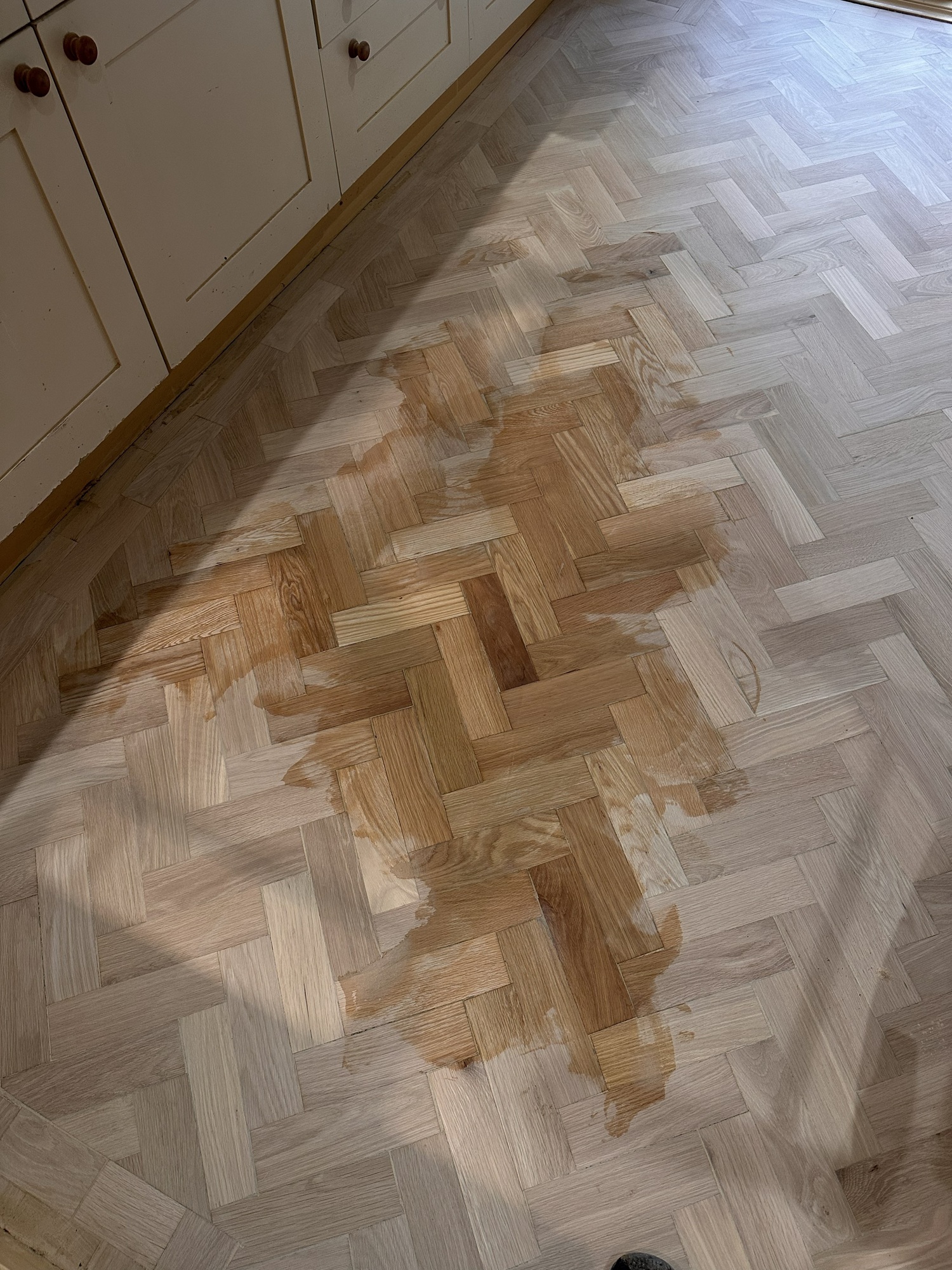
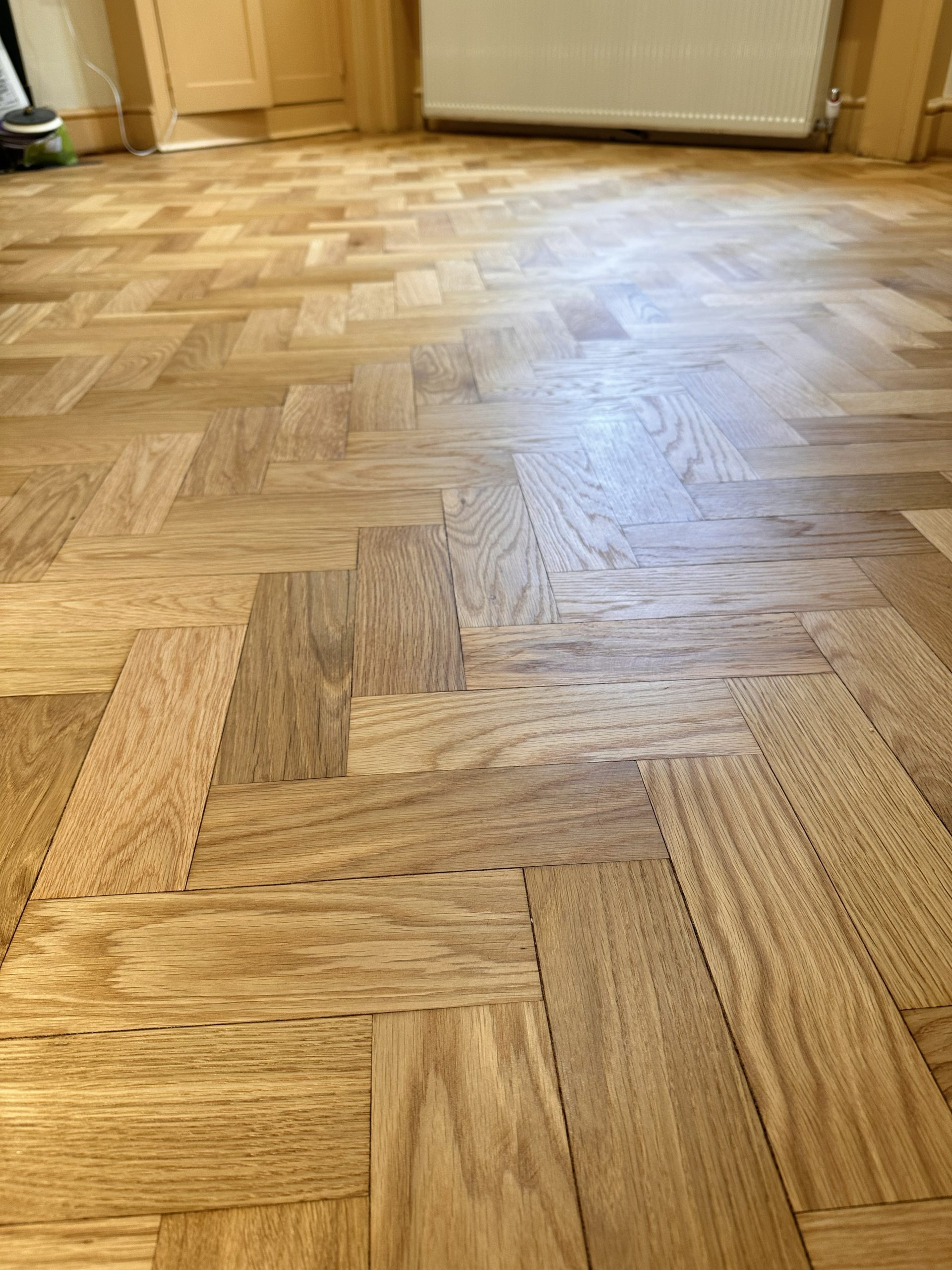
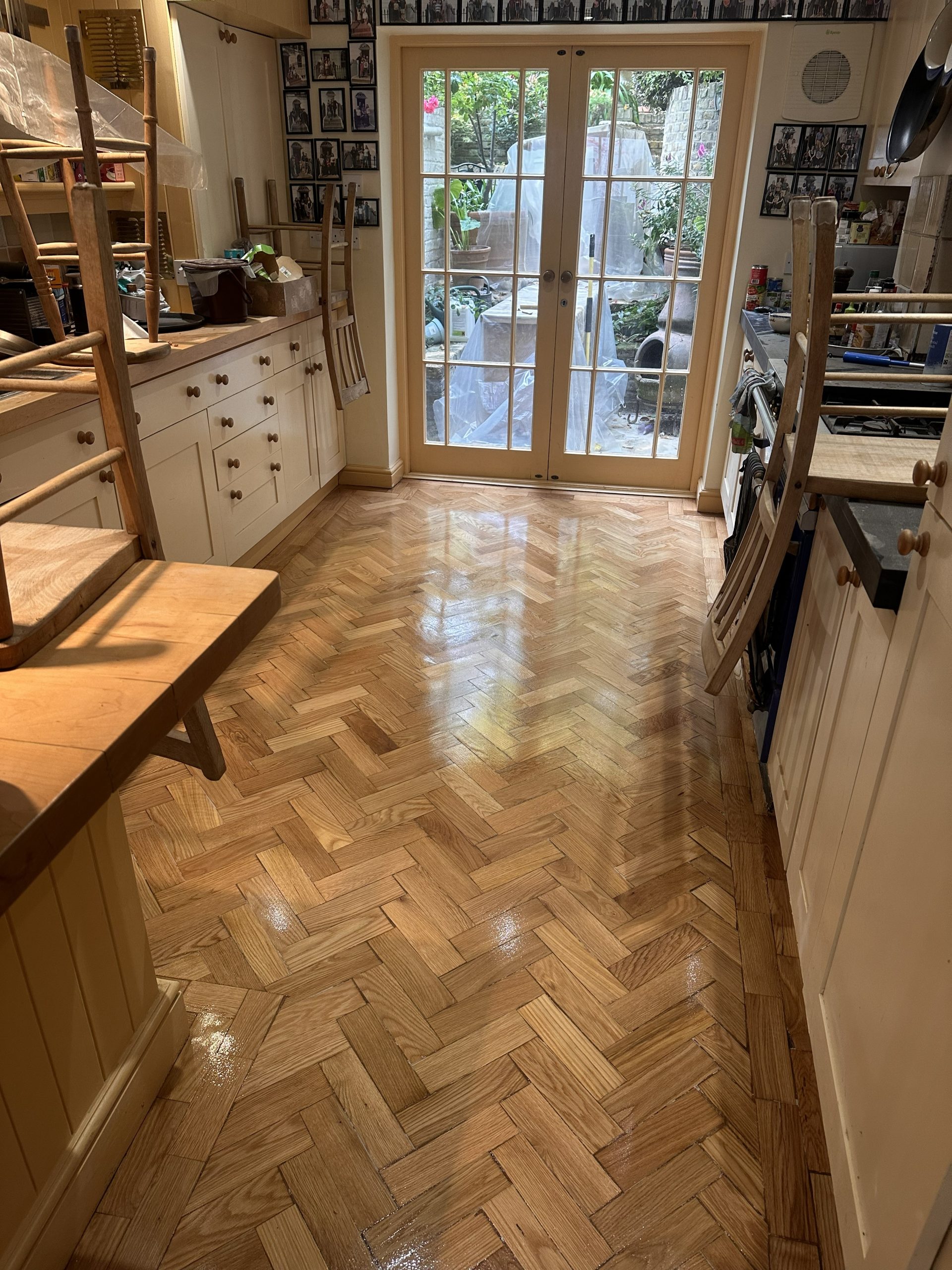
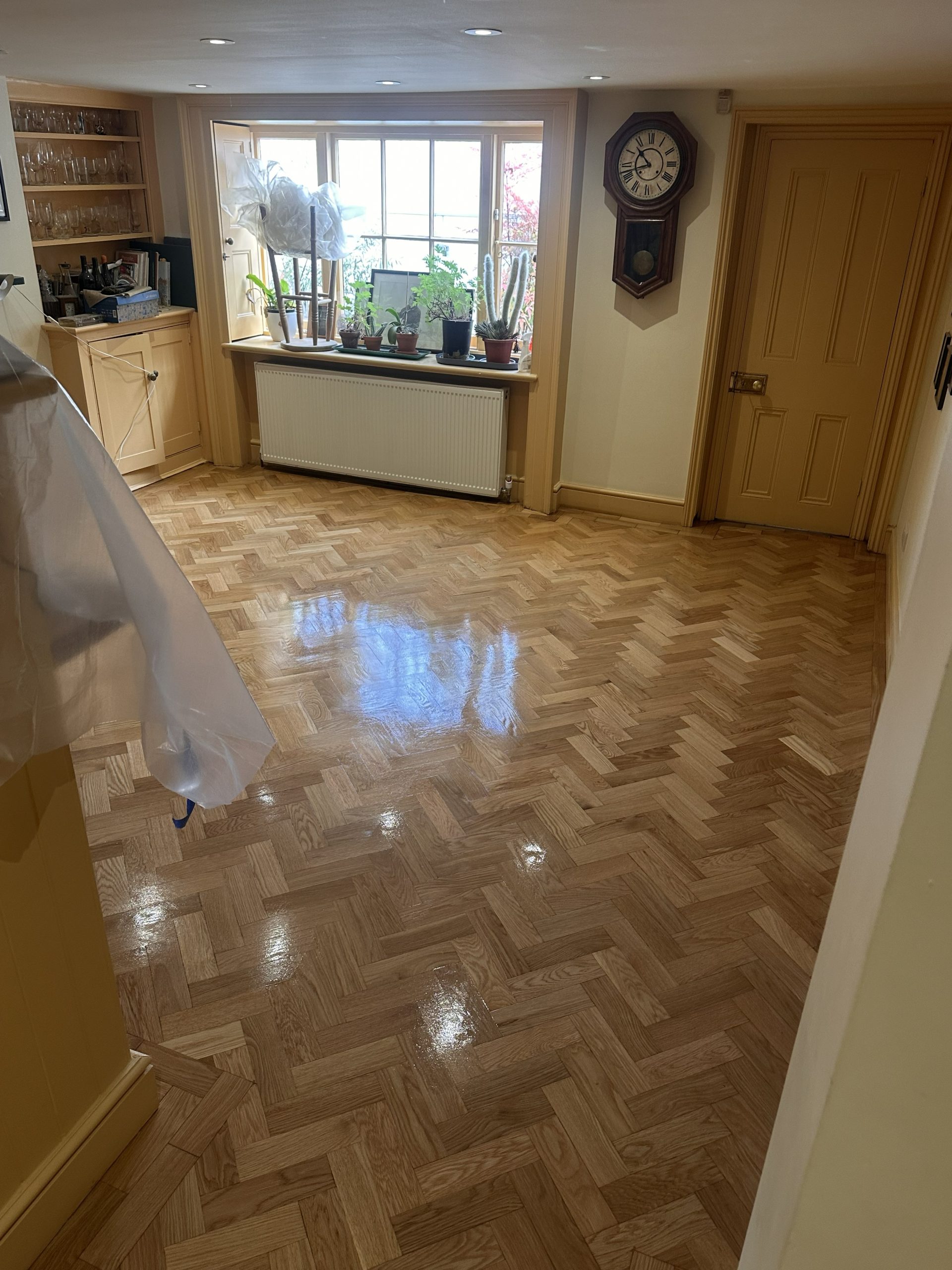
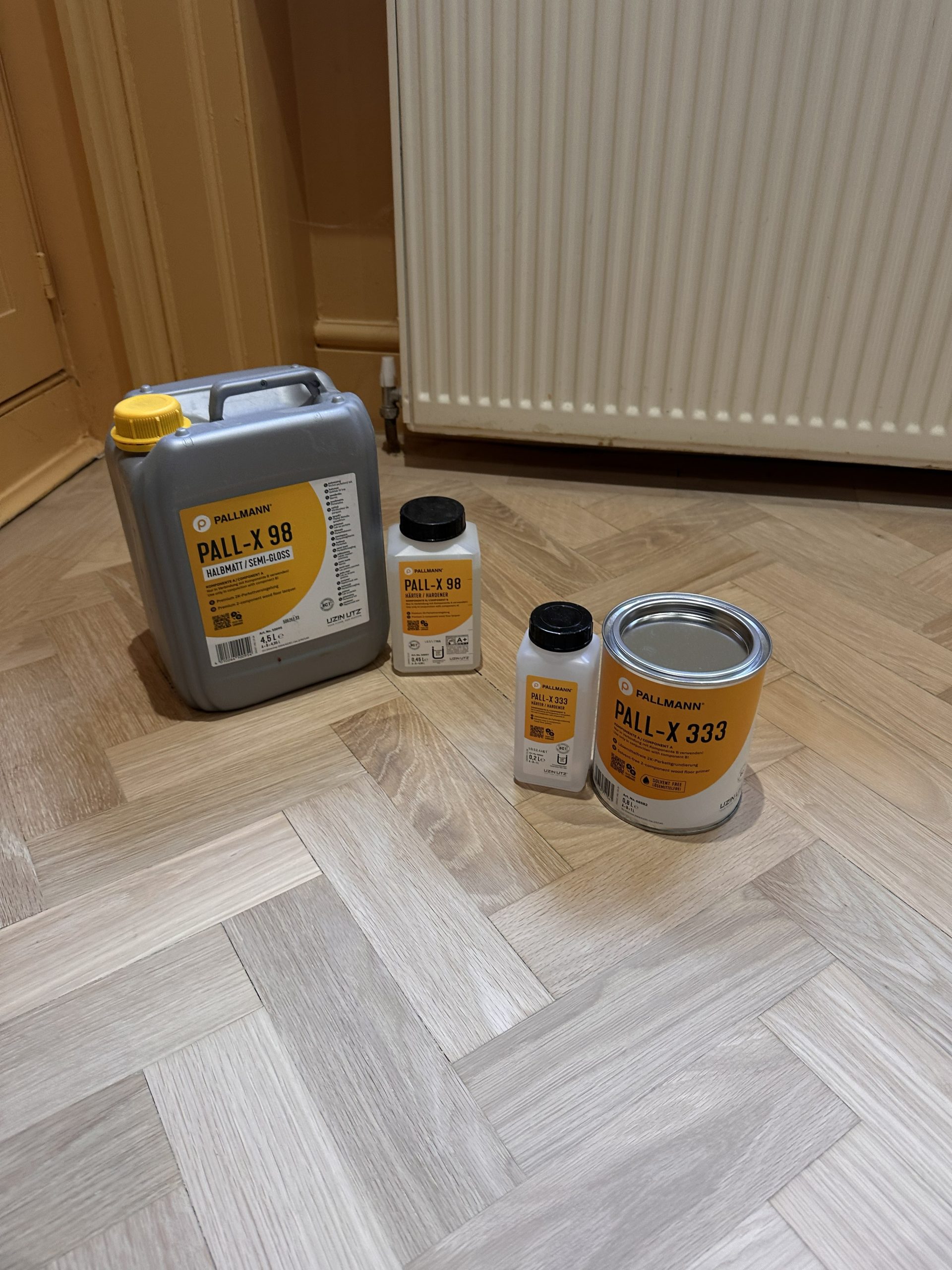
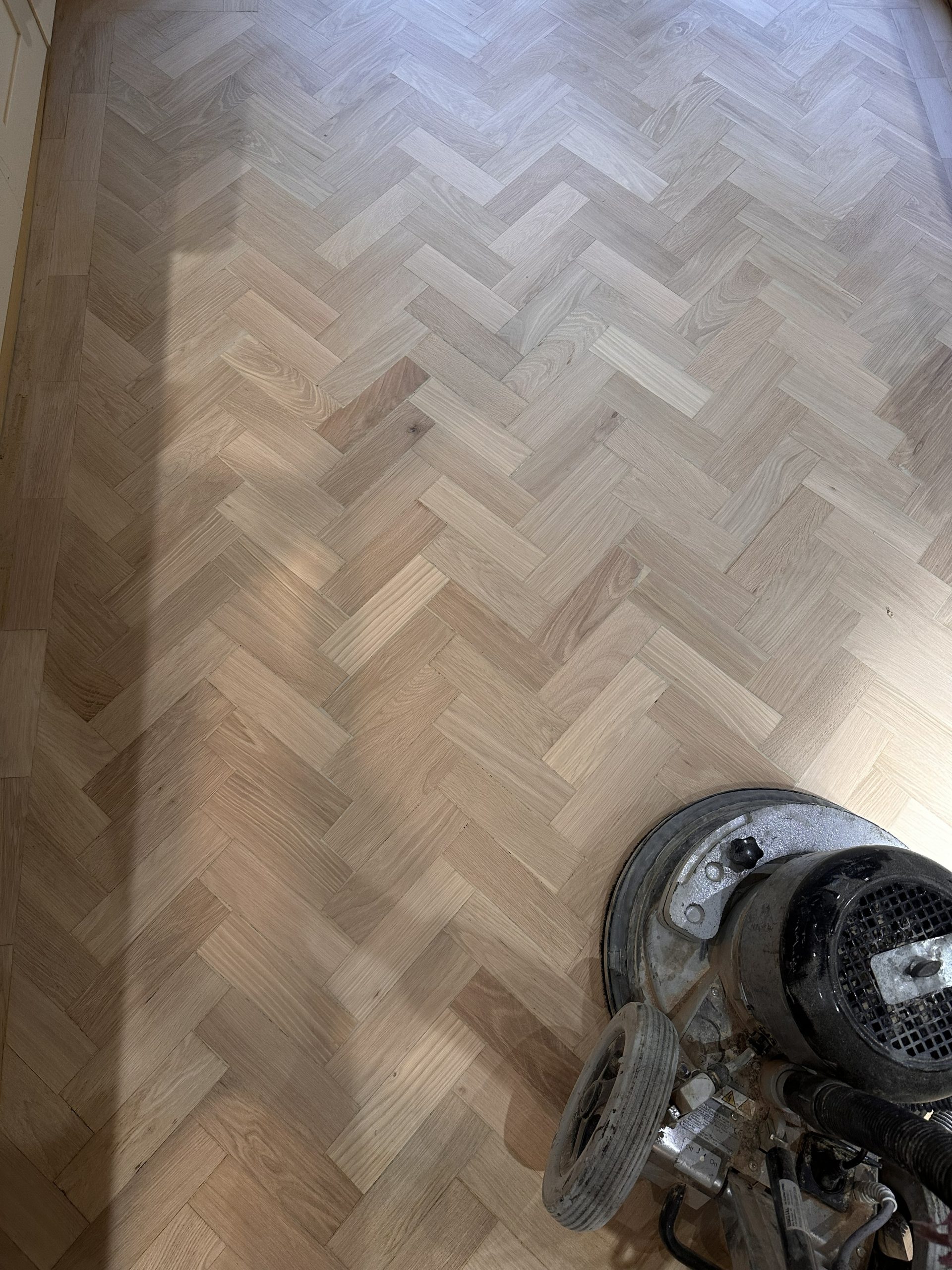
After the floor was secure, we sanded the entire area, carried out gap filling where appropriate, and prepared the surface for finishing. The client wanted a deeper tone with a soft sheen, so we applied an oil-based primer followed by two coats of satin lacquer.
That final stage brought the whole floor back together visually. It did not erase the fact that the floor had suffered water damage, but it did restore warmth, cohesion, and protection to the space.
The Result
This was not a case where we could honestly promise a perfect reset. Some water-damaged flooring can be brought back beautifully. Other cases involve permanent movement in the wood, especially after prolonged water exposure. This project sat in the middle.
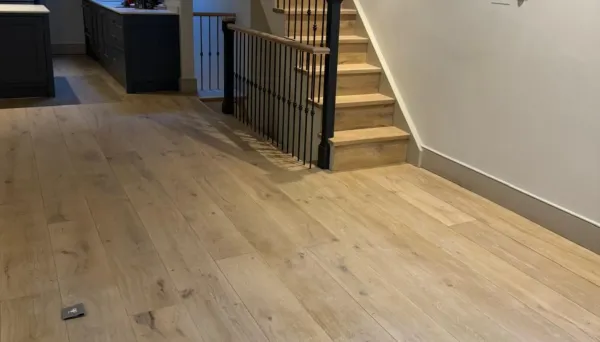
What we achieved was a stable, refinished floor that felt whole and usable again. The boards were secured, the herringbone pattern was rebuilt, and the room regained its sense of order. Most importantly, the client avoided a full replacement and the added disruption that comes with it.
See more related services about floor repair in London.
Key Challenges Along the Way
This job came with four main challenges.
First, the original fixing had failed. Once the adhesive bond is lost, the floor water damage becomes a structural problem, not simply a finishing problem.
Second, the herringbone layout had to be preserved. Even small errors in board placement would have disrupted the pattern.
Third, there were material limitations. No project like this is helped by pretending every original board can be saved. Where sections were too affected, replacement boards had to be sourced.
Fourth, the expected outcome needed careful handling. A good restoration depends on honesty. The client needed a realistic understanding of what could be improved, what could be preserved, and where the limits were.
Repair Costs: What Shapes the Price
The exact cost of wood floor water damage repair depends on the size of the affected area, the type of wood floor, the extent of the damage, and how much subfloor work is required. In a project like this, the main cost drivers are labour time, replacement materials, subfloor preparation, and sanding and refinishing.
What this case shows is that targeted restoration can sometimes be a more cost-conscious alternative to replacing the entire floor. That will not always be the right answer, but where salvage is realistic, it can reduce waste and preserve more of the original floor.
For broader context on restoration and repair cost factors, refer to guidance from the Which? Home Insurance and Repairs resource and industry standards from the British Wood Flooring Association (BWFA)
How Long the Process Took
Projects like this are usually completed in phases rather than in one quick visit. Inspection comes first. Then the affected boards are lifted, the subfloor is checked and prepared, the floor is reinstalled, and the whole area is sanded and refinished.
The drying period and the total restoration timeline are not always the same thing. A floor may be dry enough to work on before it is ready to be fully refinished. That is why rushed decisions can create more damage. The right sequence protects the result.
Why a Proper Assessment Matters
Wood floor water damage is one of those problems that tempts people into a quick fix. Try to dry it, clean it, sand it, and hope for the best.
Sometimes that works for light water stains. It does not work for failed adhesion, subfloor issues, or widespread movement across engineered wood flooring. Professional restoration gives you a proper assessment, the right repair sequence, and a more dependable result. Just as importantly, it tells you when restoration is no longer the sensible option.
How to Reduce the Risk of Further Damage
Act quickly on any leak, spill, or signs of water exposure. Check seals around kitchens and appliances. Avoid excessive water when cleaning a wooden floor. Watch for early signs of water damage such as slight cupping, darkening, staining, or movement underfoot.
The sooner the problem is dealt with, the better the chance of preventing further damage.
Why Water Damage Can Escalate Quickly in London Flats
Properties in Angel often come with the kind of conditions that make rapid response important. Older plumbing, shared systems in flats, and compact open-plan layouts can all allow water to travel further than expected. In dense London properties, even a local leak can affect a wider section of flooring than homeowners first realise.
Need honest advice on a water-damaged wood floor?
If your wood floor has suffered water damage, the best first step is a proper assessment. We will tell you whether the floor can realistically be restored, what level of finish you can expect, and whether repair or replacement is the better route.
Request a free quote today for honest advice and a practical plan.
In this Angel, London project, the engineered wood herringbone floor had lifted, opened up, and come away from the subfloor after water exposure. At first glance, it looked beyond saving.
After inspection, we recommended a more considered route. Rather than replacing the entire floor, we carried out a targeted restoration to preserve as much of the original material as possible, rebuild stability, and return the floor to a usable finished condition.
This kind of approach is often the right fit when the floor still has recoverable material and the damage has been assessed properly.
✓ Arrange a proper inspection early
✓ Check for lifting, gaps, and failed adhesion
✓ Assess both the floor and the subfloor
✓ Avoid rushing into full replacement
✓ Refinish only once the structure is stable
Water damage is rarely just a surface issue. The visible staining or movement is only part of the problem. What matters most is whether the floor is still secure, whether the subfloor has been affected, and whether the boards can be reused safely.
For more detail, this section can link through to your wood floor restoration service page or a related advice article on water damaged flooring.
When water penetrates an engineered wood floor, the issue often goes beyond appearance. Boards can swell, shift, lift, or lose their bond with the subfloor. In patterned floors such as herringbone, even local movement can affect the wider layout.
That was the challenge in this project. The floor was no longer just worn or marked. It had become unstable in places, which meant the recommendation needed to focus on structure first and finish second.
A cosmetic fix would not have lasted. The successful result depended on careful lifting, subfloor preparation, reinstatement, sanding, and refinishing.
This case study shows how water damaged wood flooring can sometimes be restored rather than removed entirely. By taking up the affected boards carefully, preparing the subfloor properly, and reinstalling matching sections where needed, we were able to stabilise and refinish the floor without replacing the whole installation.
The goal is not to promise perfection. It is to recommend the right level of work for the floor, the property, and the client.
Common Questions About Water-Damaged Wood Floors
Yes, sometimes, but it depends on how deeply the water has affected the boards, adhesive, and subfloor.
That depends on the extent of the water exposure, the type of flooring, and whether the subfloor is affected.
It depends on the affected area, severity, materials, and whether replacement boards or subfloor work are needed.
Common signs include lifting, cupping, warping, staining, gaps, and loose boards.
As soon as you notice movement, staining, lifting, or moisture that is not drying out quickly.
Contact us for more information.
Happy Customers
Read what our satisfied customers have to say
Efficiency
Effortless scheduling and premium results – we make it simple to book expert floor care that’s done on time, every time.
Satisfaction Guaranteed or Your Money Back
We complete projects on time, every time
We deliver exceptional quality for every project
Guaranteed satisfaction
At Silver Lining Floor Care, we prioritize your satisfaction above all else. Our team of experts is dedicated to providing unparalleled service that exceeds your expectations.

Always provide a courteous and professional service.

Start and finish on time as agreed with the customer.

Apply our expertise at all times.

To protect your property and leave it clean.

Offer a full follow up service should you need it.
Expertise
Craftsmanship, Care, and Trusted Service Since 2004
At Silver Lining Floor Care, we bring experience and precision to every surface we treat. Our comprehensive services are designed to restore, clean, and protect all types of flooring—helping you maintain lasting beauty, hygiene, and value. Whether it's natural stone, hardwood, or soft furnishings, we've got it covered:
Whether you need a full transformation or regular upkeep, we’re here to help. Explore all our services and see how we can bring your floors back to life.
Portfolio
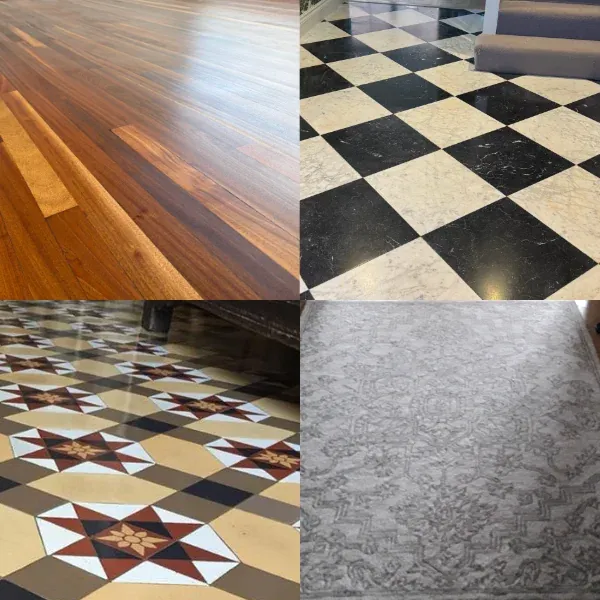
At Silver Lining Floor Care, we take pride in our expert floor restoration services across London. Our portfolio showcases stunning transformations that highlight our commitment to quality and precision. Whether it’s restoring old floors or enhancing their beauty, our work reflects the highest standards in the industry.
Knowlege centre
Stay informed with our informative blog posts