


 info@silverliningfloorcare.co.uk



Learn how to safely clean natural stone floors without etching or staining. From daily care to what to avoid.
Read more
Published on 04 Sep 2023
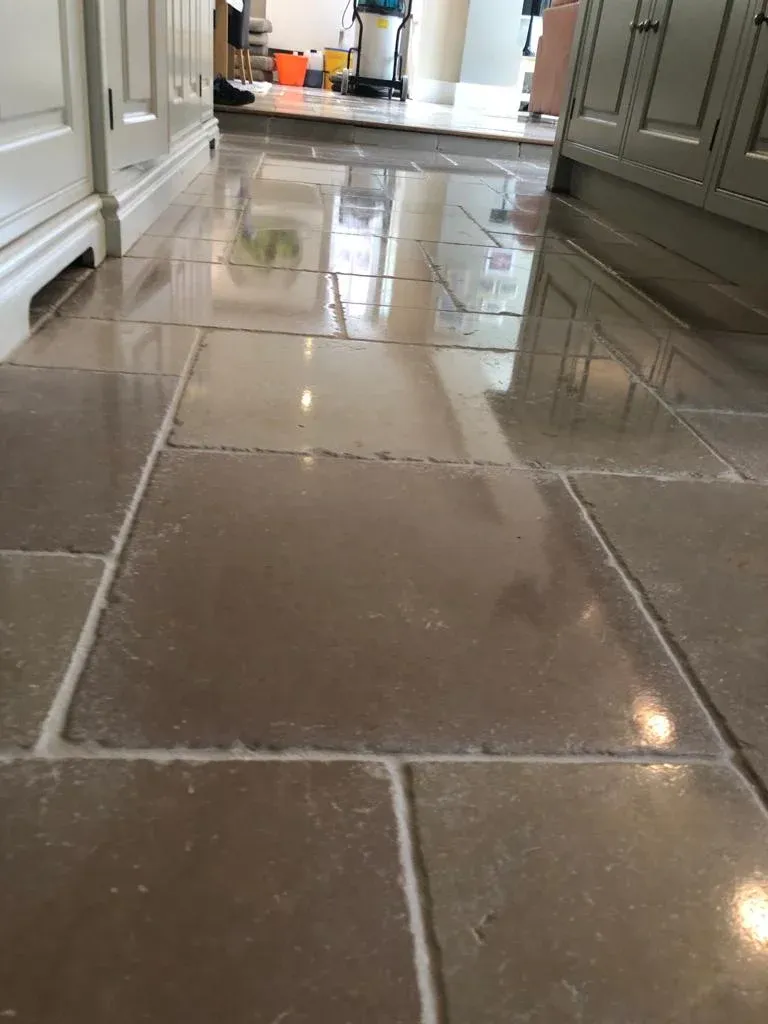
When creating a luxurious and durable flooring solution, limestone is a timeless choice. Its natural beauty and durability make it a popular option for both residential and commercial spaces. However, one must turn to the art of vitrification to truly unlock its full potential and achieve that coveted glossy finish. In this blog post, we’ll take you through the intricate process of vitrification for limestone floors, a transformative technique that elevates the aesthetics and longevity of this exquisite natural stone.
Before we delve into the fascinating world of vitrification, it’s essential to start with a clean canvas. Preparing the limestone floor is the foundation of the entire process. Begin by meticulously removing any loose dirt, dust, or debris from the surface. Sweeping or vacuuming will do the trick, but be thorough. A pristine starting point is crucial for the best results.
The journey to a luminous limestone floor begins with the first step: initial grinding. Coarse diamond abrasive pads or discs are employed in this phase. Their purpose is to level the floor and eliminate any existing blemishes, coatings, or scratches. Through this grinding process, a smooth and uniform surface is achieved, setting the stage for the subsequent polishing steps.
As we move forward, it’s time to bring out the shine. Progressive polishing is the heart of the vitrification process. This involves using finer grits of diamond abrasive pads or discs to gradually refine the limestone’s surface. The progression ranges from coarse (30-100 grit) to fine (800-3000 grit), each pass taking the floor closer to its ultimate glossy glory. It’s an art form where patience and precision are key.
Once the desired level of shine is attained, the limestone receives a special treatment. A chemical densifier or hardener is applied, which penetrates the stone and reacts with its calcium carbonate content. This chemical transformation makes the limestone denser and more resistant to staining and wear. It also helps to lock in the shine achieved during the polishing process, ensuring longevity and durability.
Now, as we approach the zenith of luminosity, we continue with the final polishing. This stage involves additional passes with fine-grit diamond abrasive pads, bringing the floor to its highest shine potential. The surface becomes smooth as silk, and the reflections are akin to gazing into a crystal-clear pool. It’s the moment when the limestone truly dazzles.
But wait, we’re not finished yet! The vitrification process often includes a final flourish known as crystallization. Here, a specialized crystallization compound, typically containing oxalic acid, is applied. A machine fitted with a steel wool or synthetic pad is employed to gently buff the floor. This seemingly magical process triggers a chemical reaction that forms a protective crystalline layer on the limestone’s surface. The result is a glossy finish that not only shines but also guards against future wear and tear.
With the vitrification process complete, it’s imperative to conduct a thorough cleaning to remove any residual compounds. This ensures that your limestone floor not only looks stunning but is also safe for use. Regular maintenance is equally crucial to preserve the shine and durability of your newly vitrified floor. Routine sweeping and mopping with a pH-neutral cleaner will keep it looking its best for years to come.
In conclusion, vitrification is a masterful process that transforms ordinary limestone floors into extraordinary works of art. This intricate and labour-intensive technique requires expertise and the use of specialized equipment and chemicals. It’s a job best entrusted to professionals trained in stone restoration and maintenance. When executed with precision, vitrification can breathe new life into a dull and worn limestone floor, turning it into a breathtaking and long-lasting surface with a high-gloss finish.
So, if you’re looking to elevate the elegance and durability of your space, consider the art of vitrification for your limestone floors. It’s a journey worth taking, one that will leave you with a floor that not only reflects light but also the timeless beauty of natural stone.
Vitrification is a specialized process that enhances the durability and appearance of limestone floors. It involves grinding, polishing, and applying chemical treatments to create a high-gloss, protective layer. This process not only improves the stone’s aesthetic appeal but also increases its resistance to stains and wear.
The duration of the vitrification process depends on the floor’s size and condition. Typically, it can take anywhere from several hours to a full day, as the technique requires multiple stages of grinding, polishing, and chemical treatment for the best results.
Yes, vitrification is generally suitable for most limestone types. However, it’s best to consult with a stone care professional, as some varieties may require specific treatments or additional care based on their unique characteristics.
A vitrified limestone floor is highly durable and more resistant to wear, stains, and scratches compared to untreated stone. The added protective layer helps the floor maintain its glossy appearance, even in high-traffic areas, with proper maintenance.
To keep a vitrified limestone floor looking its best, regular sweeping and mopping with a pH-neutral cleaner are recommended. Avoid abrasive cleaners and chemicals that can damage the protective layer. Periodic professional maintenance will also help preserve the shine and longevity.
Vitrification is a complex process that requires specialized equipment, materials, and expertise. It’s best performed by trained professionals who understand the intricacies of stone care, ensuring the highest quality finish and long-lasting results.
With proper care, the glossy finish of a vitrified limestone floor can last several years. Routine maintenance, along with occasional professional touch-ups, will help preserve its luster and protect the stone over time.
While vitrification adds a high-gloss finish, it doesn’t necessarily make the floor slippery. However, like any polished surface, it may become slick when wet. Using mats in areas prone to moisture and promptly cleaning spills can help maintain safety.
The cost of vitrification varies based on factors such as the floor’s size, condition, and location. For a detailed estimate, it’s best to consult a professional stone care provider who can assess your specific needs.
Yes, vitrification can be applied to other types of stone, such as marble and granite, but the process may vary slightly. Each stone type requires unique care, so it’s essential to consult a professional to determine the best approach for your flooring material.
Contact us for more information.