


 info@silverliningfloorcare.co.uk



Learn how to safely clean natural stone floors without etching or staining. From daily care to what to avoid.
Read more
Published on 22 Jan 2026
“I think I’ve ruined my stone floor.”
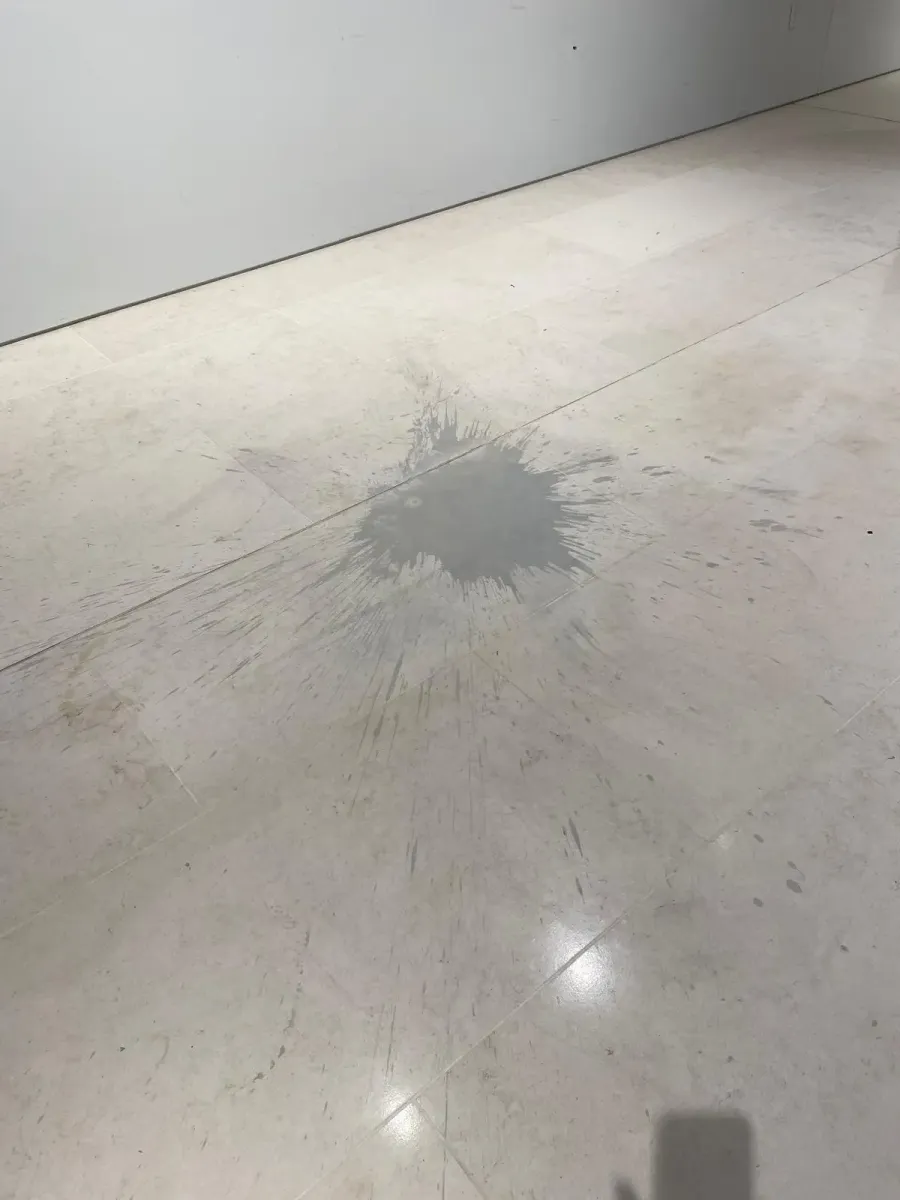
That sentence comes up more often than you’d imagine. A simple spillage, a well-meaning cleaner, or an acid wash gone wrong can leave a stain or dull patch on a natural stone floor that suddenly feels permanent.
Stone floors feel timeless, which is why damage feels personal. The good news is that most acid-related problems are repairable, especially when you understand what’s happened to the surface of the stone and when to consider professional stone floor cleaning and restoration in London.
What most people call an acid stain on a stone floor is usually etching, not a stain trapped inside the stone.
Acidic substances, such as wine, lemon juice, vinegar, and toilet cleaner, react with calcium-based tile such as marble, limestone, travertine, and polished calcareous stone.
What to do immediately:
Only then can you safely remove the stain or plan repairs.
Panic causes more damage than acid. Before attempting any repair, slow down.
This is the quiet moment before you act. The pause that prevents regret.
☐ Protect your hands and eyes
Wear gloves and eye protection. Polishing compounds, poultices, and cleaning products can irritate skin and eyes.
☐ Ventilate the room
Open windows or doors, especially when using powders or solvent-based products.
☐ Use only pH-neutral cleaners
Anything acidic or “natural” like vinegar can permanently worsen damage to natural stone tiles.
☐ Never mix cleaning products
Chemical reactions can damage tile surfaces and pose health risks.
☐ Avoid abrasive pads or scrubbers
Abrasive pads can scratch the floor and spread etching across affected tiles.
☐ Spot-test every product first
Always test in a hidden area. Stone finishes vary more than people realise.
☐ Stop if the surface dulls further
That’s a sign of active etching. Pause and reassess.
Different tile types react very differently to acids and cleaning agents. Guessing can permanently damage a natural stone floor.
| Stone Type | Acid Sensitivity | Common Acid Damage | Typical Reaction | DIY Repair Safe? |
| Marble | Very High | Etching, dull spots | Surface corrosion | Limited |
| Limestone | Very High | Etching, roughness | Surface erosion | Limited |
| Travertine | High | Etching, pitting | Loss of finish | Limited |
| Terrazzo (marble-based) | High | Etching, fading | Binder damage | Limited |
| Granite | Low | Discoloration | Sealer breakdown | Often |
| Slate | Low–Medium | Fading, staining | Texture change | Often |
| Quartzite | Low | Light discoloration | Minimal reaction | Often |
A limestone tiled floor is especially vulnerable. If acid damage is widespread, professional limestone cleaning and polishing in London is often the safest solution.
Etching cannot be cleaned away. It must be polished or re-polished.
Light and touch will tell you which one you are looking at.
Run a fingernail gently across the mark. An etch often gives a noticeable change in texture. A stain usually does not.
True stains, especially oily stains, greasy and oily stains, or rust stains, require a poultice.
A poultice is an absorbent paste that draws a contaminant back out of porous stone. You will find recipes online — diatomaceous earth mixed with hydrogen peroxide, or with a solvent — but that is not how we work.
In practice we use ready-made professional poultices, or a product made for the specific type of soiling, rather than mixing our own. What we reach for depends on whether the stain is oil, rust, coffee or wine. There is no single universal recipe, and the wrong one can set a stain instead of lifting it.
Poultice method:
Some difficult stains cannot be removed fully without repetition or professional stone care.
Small dull patches may improve using a marble polishing powder and gentle pressure with a suitable pad. Always blend outward to restore the original appearance.
When damage is widespread, polishing alone isn’t enough. The stone must be honed with burnishing pads before re-polishing.
This is especially common with marble. In these cases, specialist marble cleaning and polishing in London delivers far more consistent and safer results.
One thing worth knowing before you start on it yourself: on anything larger than a small mark, we normally have to work the whole element or the whole plane — the full tile, the full worktop, the full run — rather than the damaged spot alone. Polish a patch in isolation and you have swapped a matte mark for a shiny one. It is still visible, just differently.
The one we get called out to most often: limescale remover on marble. The customer sees a white deposit around a shower tray or on a worktop, reaches for an acidic descaler, and a few minutes later the deposit has gone and there are matte patches where it was. The product did not leave a stain — it chemically etched the surface of the stone. Bathrooms and worktops are where this comes up most. Most of them are repairable, but with surface restoration, not with more cleaning.
Even hardwearing surfaces like terracotta or slate can suffer residue buildup and sealer failure.
Once repairs are complete:
A sealer won’t stop etching, but it reduces absorption and buys time to remove stains safely.
If you cannot remove the stain, if the floor continues to dull, or if multiple tiles are affected, stop. At this point, professional stone floor cleaning and restoration in London can refinish, re-polish, and re-seal the surface without risking further damage.
A universal figure is not possible, and anyone giving you one down the phone is guessing. Four things move the price: the type of stone — marble, limestone and travertine all behave differently — the size of the damage, the existing finish (polished or honed), and access.
Our minimum charge for stone restoration is from £450. Spot repairs are priced as a minimum charge; larger restorations are quoted per m² after an inspection. Worth knowing before you plan the job: in roughly 80% of cases the rest of the floor needs a clean, polish and seal as a minimum. Once one area is brought back, an untouched floor around it tends to look worse than it did before you started.
Send us photos and we will tell you what you are actually looking at and what the options cost. WhatsApp 07850 631877.
Frequently Asked Questions
Most so-called acid stains on natural stone floors are actually etch marks caused by acidic substances. Liquids like vinegar, lemon juice, wine, and toilet cleaner react with calcium-based stone such as marble, limestone, and travertine, dulling the surface rather than staining it.
Yes, but only if you identify the damage correctly. True stains can often be removed using a poultice, while acid etching cannot be cleaned away and requires polishing or honing to restore the stone’s finish.
No. Vinegar is acidic and can permanently damage natural stone tiles, especially marble and limestone. Even brief contact can cause etching, making the floor dull and rough. Always use a pH-neutral stone cleaner instead.
Stone sealers do not prevent etching, but they do reduce absorption. This means spills are less likely to become deep stains, giving you more time to blot and rinse before damage occurs.
Contact us for more information.