


 info@silverliningfloorcare.co.uk


Learn how to safely clean natural stone floors without etching or staining. From daily care to what to avoid.
Read more
Published on 04 Feb 2025
This is a common question, and understandably so—no contractor wants to be responsible for damaging freshly completed work.
From a tradesperson’s perspective, it’s always easier to complete their task first, without worrying about protecting someone else’s finished work. But what about from a homeowner’s perspective? The decision often comes down to dust control, potential damage, and the overall workflow of your renovation. Let’s break it down.
One of the biggest concerns when sanding floors after painting is dust settling on freshly painted walls. However, with modern sanding equipment and experienced professionals handling the machines, dust-free sanding is now standard practice.
The only exception? Stair sanding. Because of the angles and smaller machines used, stair refinishing can generate more airborne dust than sanding an open floor space. But even in these cases, proper containment and clean-up ensure minimal disruption.
Some homeowners assume that floor sanding should come first to create a clean base before painting. A good decorator will always protect the floors, but the real question is:
Even with protection in place, mistakes happen:
Any of these issues could require re-sanding and refinishing, leading to extra time and cost.
Alternatively, painting is completed first, and floor sanding is done as the final step.
The biggest risk? Sanding machines accidentally catch a wall or skirting board. However, this is:
✔ Rare – Skilled professionals take precautions to avoid it
✔ Easy to fix – A simple paint touch-up is usually all that’s needed
Even with staircase sanding, any dust created is manageable with proper clean-up.
From a contractor’s perspective, it’s always easier to sand first. But from a homeowner’s perspective, our advice is:
📌 Paint first, then sand the floors last.
Pro tip: If you’re painting skirting boards, leave the final coat until after sanding to get a flawless finish.
When we refinished floors for Chanel, their shelves weren’t covered—and we had zero dust complaints. With the right techniques, sanding after painting is not an issue—just a matter of proper planning!
Every home renovation is different, but if you want a smooth, hassle-free process, we recommend completing the painting first and the floor refinishing last.
If you’re planning floor restoration and painting, we can help you schedule the work in the right order. Contact us today!
Should You Sand Floors Before or After Painting?
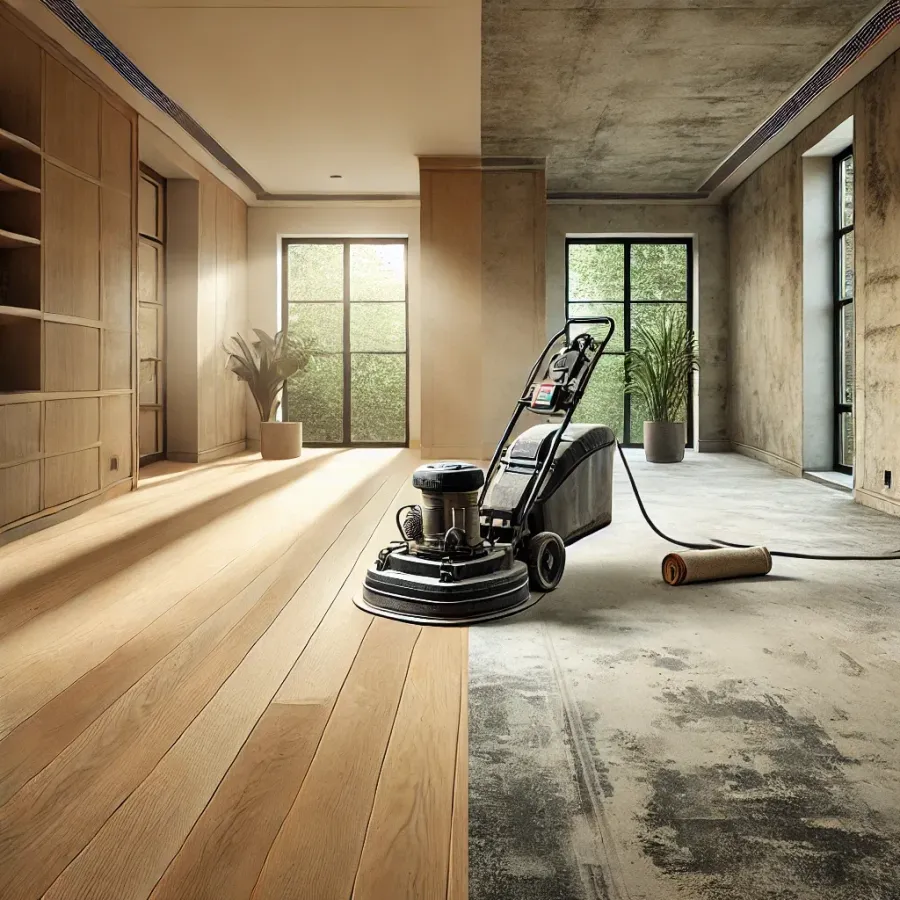
While both options are possible, painting first and sanding last is often the best approach. This prevents paint spills from damaging freshly finished floors and ensures a seamless final look. Minor touch-ups on skirting boards or walls after sanding are much easier to manage than repairing a damaged floor.
Modern dust-free sanding machines significantly reduce airborne dust, making this much less of an issue. However, for staircase sanding, where smaller machines are used, some dust can be created. Proper containment and cleaning help keep walls clean.
While it’s rare, it can happen. The good news is that minor scuffs on walls or skirting boards are easy to fix with a simple paint touch-up, unlike floor damage, which would require refinishing.
Yes! If you’re repainting skirting boards, it’s a good idea to leave the final coat until after sanding. This way, any minor marks or dust from sanding can be covered easily with the last coat of paint.
The only real risk is accidentally scuffing the walls or skirting boards with the sanding machine, which is easily fixable with touch-up paint. This is much less of a problem than trying to protect a freshly finished floor from paint spills, water damage, or dropped tools.
📌 Paint first, then sand the floors last. This minimises the risk of damage to the floor and allows for a final coat on skirting boards if needed.
It depends on the type of finish used. Some lacquers require a full curing period of up to 10 days, while others allow light foot traffic after 4 hours. Always follow the professional’s recommendations.
If floors are already finished before painting, they should be properly covered with brown paper and heavy-duty protection. However, if you choose to sand after painting, this step isn’t necessary, as any paint drips will be sanded away.
We specialise in floor sanding and refinishing but can coordinate with decorators to ensure the work is completed in the right sequence for the best results. Contact us to discuss your project! We are happy to recommend painting contractors.
Contact us for more information.