

 info@silverliningfloorcare.co.uk



Learn how to safely clean natural stone floors without etching or staining. From daily care to what to avoid.
Read more
Published on 27 Mar 2026
By Johnny Czarnota, Founder of Silver Lining Floor Care
If you’re deciding between dust-free sanding and traditional sanding, here’s the simple truth:
Dust-free floor sanding uses advanced vacuum systems to capture most airborne dust during the sanding process. It keeps your home cleaner, improves air quality, and often leads to better results.
Traditional sanding, on the other hand, creates a significant amount of dust that spreads across your home. It may cost less upfront, but the cleanup and the stress can be much higher.
In most modern homes, dust-free sanding is the better choice.
If you’re considering upgrading your floors, it’s worth exploring a professional dust-free floor sanding service to see how modern systems can transform both your home and your experience.
When people hear “dust free,” they often imagine a perfectly spotless room. I wish that were true.
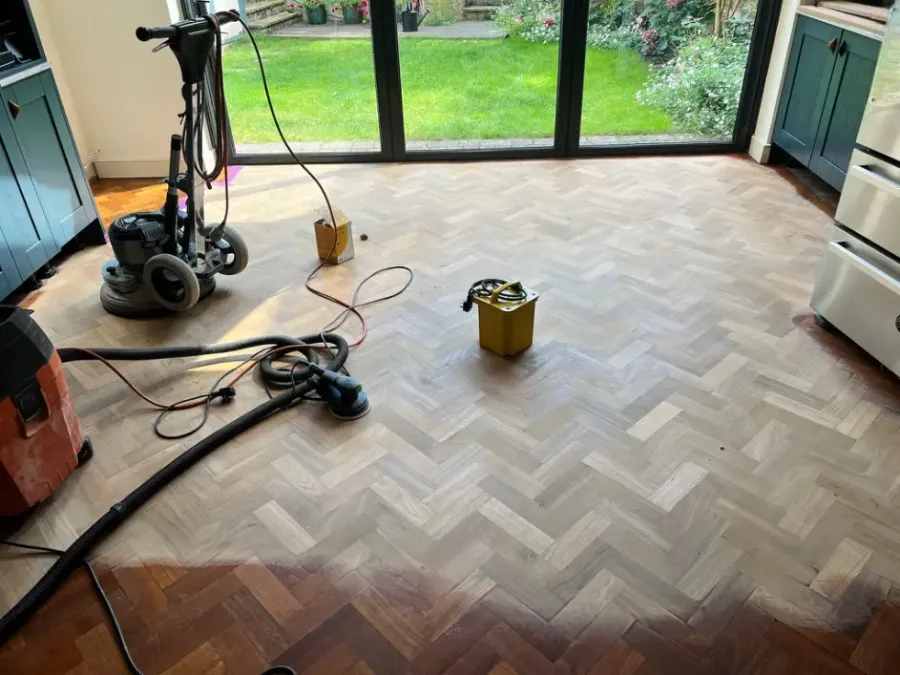
In reality, dust-free floor sanding uses a sanding system with powerful vacuum systems attached. These systems suck up dust the moment it’s created. Think of it as sanding and cleaning at the same time.
I remember working on a wooden floor in a family home where the client had severe allergies. They were nervous—understandably so. But once we used a Bona dust containment system, the difference was obvious. Minimal dust, cleaner air, and a much calmer homeowner.
That’s the beauty of modern dust containment systems.
If you want a deeper look at how these systems work in real homes, you can read our complete guide to dust-free floor sanding, where we break down the process step by step.
It’s not the absence of dust, but it’s a massive reduction in airborne dust.
Traditional floor sanding is the older method most people still picture.
It involves sanding machines with basic dust bags. While they collect some dust, a large amount escapes into the air. That’s where the trouble begins.
I once walked into a home the day after traditional sanding. The floors looked great, but everything else didn’t. A thin layer of dust had settled on furniture, shelves, even inside cupboards.
That’s what dust settling looks like in real life.
But compared to modern dust-free sanding systems, it produces considerable dust.
In many modern projects, homeowners are now moving away from these traditional sanding methods in favour of dust-free sanding solutions that reduce mess and improve results.
Here’s where things become clearer.
| Factor | Dust-Free Floor Sanding | Traditional Floor Sanding |
| Dust Levels | Minimal dust (90–99% captured) | High dust levels |
| Air Quality | Improved indoor air quality | Poor during and after |
| Cleanup Time | Reduced cleanup time | Extensive cleaning needed |
| Finish Quality | Cleaner, smoother finish | Risk of dust settling back |
| Experience | Cleaner and less stressful | Messy and disruptive |
If you’re unsure which option suits your home, our wood floor sanding and refinishing service combines both expertise and the right sanding system for long-lasting results.
When comparing the two methods, it’s not just about sanding, it’s about the whole experience.
This is the part many homeowners overlook.
Sanding dust isn’t just messy, it can affect your health. Fine dust and airborne particles can linger in the air and lead to respiratory problems and allergic reactions.
In traditional sanding methods, the amount of airborne dust is much higher. That increases the risk of respiratory issues, especially for families with children or pets.
Dust-free sanding minimizes this risk by reducing the amount of airborne dust.
As someone who values mindfulness and healthy living, this is something I take seriously. Your home should feel safe, not like a construction site.
Let’s talk about the part no one enjoys, cleaning.
With traditional sanding, dust will always find its way into places you didn’t expect. Behind doors, inside drawers, even in your wardrobe.
Dust settling on furniture becomes a real issue. And cleaning it? That takes time.
Dust-free floor sanding offers a much easier alternative.
I’ve seen homeowners genuinely surprised when they realise they don’t need a full-day clean after the job. That alone is worth it.
Here’s something many people don’t realise: dust affects the final result.
When dust particles settle on freshly coated floors, they can create imperfections. Tiny bumps. Uneven finishes.
With dustless sanding, the surface stays cleaner. That means:
When floors look clean from the start, they stay beautiful longer.
Yes, dust-free sanding usually costs more upfront.
That’s because of:
But here’s the honest part, traditional sanding might cost less at first, but it can lead to:
So when compared to traditional methods, the overall value of dust-free sanding often comes out ahead.
If you’re weighing up your options, we’ve also created a detailed guide on how much dust-free floor sanding costs, including what affects pricing and what to expect.
Every project is different.
In most modern homes, dustless systems are the preferred choice.
After years of sanding, restoring, and refinishing wood floors, I’ve learned something simple:
It’s not just about sanding a floor. It’s about how people feel in their space afterward.
I’ve seen clients walk into a dust-free project and smile. No mess. No stress. Just beautifully restored floors.
That’s the difference.
Dust-free floor sanding isn’t just a modern upgrade, it’s a better experience overall.
Cleaner air. Less mess. Better results.
And if you’re someone who values both craftsmanship and comfort, it’s an easy choice.
At Silver Lining Floor Care, we believe floor restoration should feel as good as it looks. Every wood floor we sand is treated with care, precision, and respect for your home and your wellbeing.
Because in the end, it’s not just about restoring floors.
It’s about creating spaces you can truly breathe in.
Frequently Asked Questions
Not completely, dust-free floor sanding typically captures 90–99% of dust, but a very small amount may still remain. However, it’s significantly cleaner than traditional sanding.
Yes, in most cases dustless sanding is better because it reduces mess, improves air quality, and delivers a smoother finish. It’s especially ideal for occupied homes.
Dust-free floor sanding usually costs more upfront due to advanced equipment, but it can save money in the long run by reducing cleanup and improving durability.
With dust-free sanding, many homeowners can stay in their homes since dust levels are minimal. Traditional sanding often requires leaving due to heavy dust and disruption.
Yes, dust-free sanding helps create a cleaner surface, which results in a smoother and more even finish. Less dust means fewer imperfections in the final coat.
Contact us for more information.