


 info@silverliningfloorcare.co.uk



Learn how to safely clean natural stone floors without etching or staining. From daily care to what to avoid.
Read more
Published on 30 Jul 2025
Is your marble floor looking dull, patchy, or worn out? 😩 You’re not alone — many homeowners in London struggle to maintain that beautiful, glossy finish that makes marble so special.
In this guide, you’ll learn exactly how to make dull marble shine again, with expert tips on deep cleaning, grinding, polishing, sealing, and aftercare. Whether it’s your hallway, kitchen, or bathroom floor — we’ll show you how to restore that luxurious, mirror-like look.
Marble is a stunning natural stone — but it’s also delicate. Over time, everyday use can cause it to lose that high-end shine and start looking dull or flat. This is especially common in busy London homes where marble flooring gets constant wear.
🧪 Acidic spills like vinegar, wine, or lemon juice (these cause permanent etching)
👣 Heavy foot traffic that wears down the surface
🧼 Wrong cleaning products, especially anything bleach-based or too alkaline
🪑 Dragging furniture or small impact scratches
💧 Lack of sealing, which allows grime and moisture to soak into the stone
Over time, these issues dull the natural polish and leave your floor looking cloudy or patchy.
Wondering whether your marble just needs a quick polish or a more intensive restoration? These telltale signs can help you decide:
👁 No visible shine — the floor looks flat, chalky, or patchy
💦 Water no longer beads — a sign the surface has worn down or lost its seal
💡 Uneven reflection — light doesn’t bounce cleanly off the stone
🦶 Rough or gritty texture — you can feel small scratches or dull spots underfoot
✅ Still unsure? We offer free assessments in London and can recommend the best approach based on your floor’s condition.
Before you polish (or grind) marble, the first essential step is a professional deep clean. Skipping this can do more harm than good.
🧹 Removes surface dirt that could cause scratches during polishing
🦠 Clears out bacteria and organic grime trapped in marble’s pores
💎 Reveals true wear and damage so we can assess whether polishing or grinding is needed
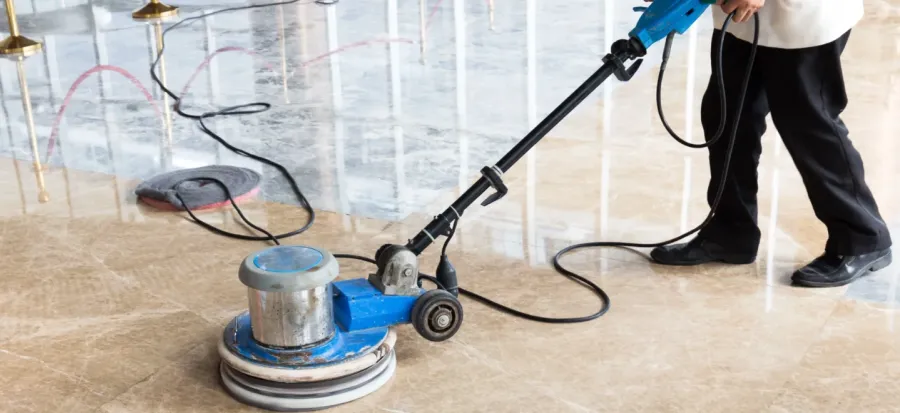
We use rotary machines with pH-neutral, stone-safe cleaners to remove buildup without harming the marble. Supermarket sprays? Often too mild to help — or too harsh to trust.
👉 DIY first? Read our safe cleaning guide before reaching for 🚫 bleach or ⚠️ vinegar.
.
Not all marble floors need the same treatment. Here’s how to tell whether marble polishing or grinding is best for your situation.
Our marble polishing services in London are ideal for floors that are dull but otherwise in good condition.
What it does:
Gently restores shine with ultra-fine diamond pads and powders
Safe for most homes and light-use areas
Leaves a smooth, reflective finish — low-dust, quick turnaround
Perfect for:
✨ Dull but smooth marble floors
🏠 Regular maintenance of luxury interiors
Marble grinding is a more intensive service used when surfaces are damaged or uneven.
What it does:
Levels the floor with coarse diamonds, removing scratches and etching
Prepares a completely fresh layer for polishing and sealing
Requires more time and must be sealed afterwards
Best for:
🛠️ Deep scratches and heavy etching
🏢 Commercial spaces or large floor areas
🔁 Resetting older marble for a complete restoration
Still unsure? 🤔
We offer free marble floor assessments in London to help you choose the best approach — with zero pressure.
After your marble floor has been polished or ground, sealing is essential to lock in the results and protect the stone from everyday damage.
💧 Repels stains from water, wine, oil, and acidic spills
🛡️ Shields the surface from wear, abrasion, and etching
🧼 Makes cleaning easier and prevents dirt from settling
🔒 Preserves the clarity and finish of your marble for longer
We use breathable impregnating sealers that soak into the stone without changing its natural look or feel — ideal for both modern and traditional homes.
Not sure if your marble needs resealing? Try this:
💧 Drip a small amount of water onto the surface
⏱️ Wait 5–10 minutes
❌ If the water darkens the marble or gets absorbed — it’s time to reseal
🏠 Domestic floors: every 1–2 years, depending on foot traffic and cleaning habits, and the initial sealer chosen. Some can alst up to 15 years
🏢 Commercial floors: yearly, or more often in high-use areas
🚿 Bathrooms/wet areas: inspect more frequently due to moisture exposure
👉 Learn more in our expert guide: Sealing Natural Stone Floors in London
Once your marble has been polished and sealed, regular care will keep it looking flawless for years to come. 🏠✨
🧴 Use pH-neutral, stone-safe cleaners – supermarket products often lack the right balance
👉 Learn more: The Basics of Cleaning Everything
🚫 Avoid acidic or bleach-based products – even a small splash of vinegar or lemon juice can etch marble
🧹 Dust mop or vacuum regularly – removing grit prevents micro-scratches
🧦 Place mats or rugs in entranceways and high-traffic areas to reduce abrasion
📆 Schedule professional cleaning every 12–18 months to refresh the surface and reseal if needed
👉 Explore: Maintenance Cleaning vs Deep Cleaning
⚠️ Pro Tip: Avoid DIY waxes and supermarket polish sprays. These can cause hazing, streaks, and uneven build-up — making the marble harder to clean and less attractive over time.
Regular professional maintenance, paired with the right daily habits, will dramatically extend the life and shine of your marble floors — keeping them looking their best for years to come. 💎
If your marble floor has lost its shine, don’t settle for dull. We offer tailored solutions to bring back the beauty of your stone — whether it’s a light polish or a full restoration.
Why choose us:
✅ Free marble floor assessments across London
🧼 Deep cleaning, polishing, grinding & sealing
🏠 Domestic & 🏢 commercial marble floor expertise
💬 Trusted by homeowners, interior designers & architects
🌱 Safe, eco-conscious products and low-dust methods
Get started:
📞 Book your floor assessment or test patch — no obligation
Frequently Asked Questions About Marble Floor Restoration 💬
To restore shine, start with a deep clean using pH-neutral cleaners. Then, depending on the level of wear:
Light dullness? Use professional marble polishing with diamond pads and powders.
Deep etching or scratches? You’ll need marble grinding to level and refinish the surface.
Always finish with a high-quality sealer to protect the shine.
We offer free assessments across London if you’re not sure which method your floor needs.
Look for these signs:
Polishing is enough if… the floor is just dull, with minor etching or no deep scratches.
Grinding is required if… the floor has uneven tiles (lippage), heavy scratches, or worn spots.
Still unsure? We’re happy to inspect and recommend the right solution.
While some kits exist, most won’t give professional results. Risks include:
Streaks or hazing from poor-quality powders
Uneven shine
Further damage from the wrong pad or machine
For long-term results and no risk, it’s best to hire a specialist — especially on valuable marble surfaces.
Stick with pH-neutral, stone-safe cleaners. Avoid:
Vinegar, bleach, or acidic sprays 🚫
Abrasive powders or scrubbing pads 🚫
We recommend using microfibre mops and dry dusting between cleans to maintain the finish.
👉 Read more: How to Clean Natural Stone Floors Without Damaging Them
Yes — sealing is the final (and critical) step.
It protects from stains, etching, and moisture
Makes daily cleaning much easier
Extends the life of your polished finish
We use breathable impregnating sealers that protect from within without changing the natural look.
Polishing: Every 1–3 years depending on use
Sealing: Usually every 12–24 months
You can test your seal by putting a few drops of water on the surface — if it soaks in within minutes, it’s time to re-seal.
Yes! We serve:
Central London
North & South London
West London (Chelsea, Kensington, Notting Hill)
East London (Hackney, Islington)
Wherever you are, we can provide a test patch or site visit to advise on the best course of action.
Contact us for more information.