

 info@silverliningfloorcare.co.uk



Learn how to safely clean natural stone floors without etching or staining. From daily care to what to avoid.
Read more
Published on 14 May 2026
Dust-free floor sanding works by using advanced sanding machines connected to powerful vacuum and extraction systems that capture dust at the source. Instead of letting dust particles spread into the air, these systems suck up dust instantly, creating a cleaner and safer sanding process with reduced airborne dust and minimal mess.
I still remember my early days in floor sanding. We would finish a job, step back, and admire the sanded floor. Then we would look around and realise everything else in the house looked like it had been through a sandstorm.
The floor looked beautiful. The rest of the home did not.
That was the reality of traditional sanding. Dust settling on furniture, in cupboards, even inside drawers that had been closed the entire time. Homeowners would smile, but there was always that quiet question behind it. “How long will it take to clean all this?”
Thankfully, things have changed.
Dust-free floor sanding is not just an upgrade. It is a better way of working. A cleaner, more thoughtful approach to wood floor restoration. Once you see the difference, it is hard to go back.
If you are new to the idea, it is worth exploring a deeper explanation in this complete guide to dust-free floor sanding, which walks through the process in more detail.
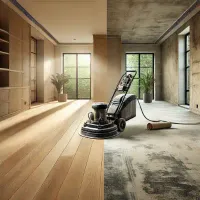
Dust-free floor sanding is a modern sanding process designed to reduce the spread of dust during wood floor sanding. Instead of allowing dust generated from sanding to drift through the room, advanced dust containment systems capture it immediately.
Let me be honest with you.
It is not completely without dust. There is always a small amount of fine dust in the air. But compared to traditional sanding, the difference is remarkable. You are working in what feels like a virtually dust-free environment.
Think of it like cooking with the lid on the pan instead of letting everything spill over the sides.
| Feature | Dust-Free Floor Sanding | Traditional Sanding |
| Dust Levels | Very low, dust captured at source | High, dust spreads freely |
| Air Quality | Cleaner indoor air | Poor air filled with airborne dust |
| Cleanup Required | Minimal cleaning | Extensive cleaning required |
| Comfort During Work | Comfortable to stay at home | Disruptive and messy |
| Dust Containment | Uses sealed extraction systems | No dust containment |
| Finish Quality | Smooth and clean result | Risk of dust settling on finish |
This gives you a clear picture of how modern sanding compares to the older approach.
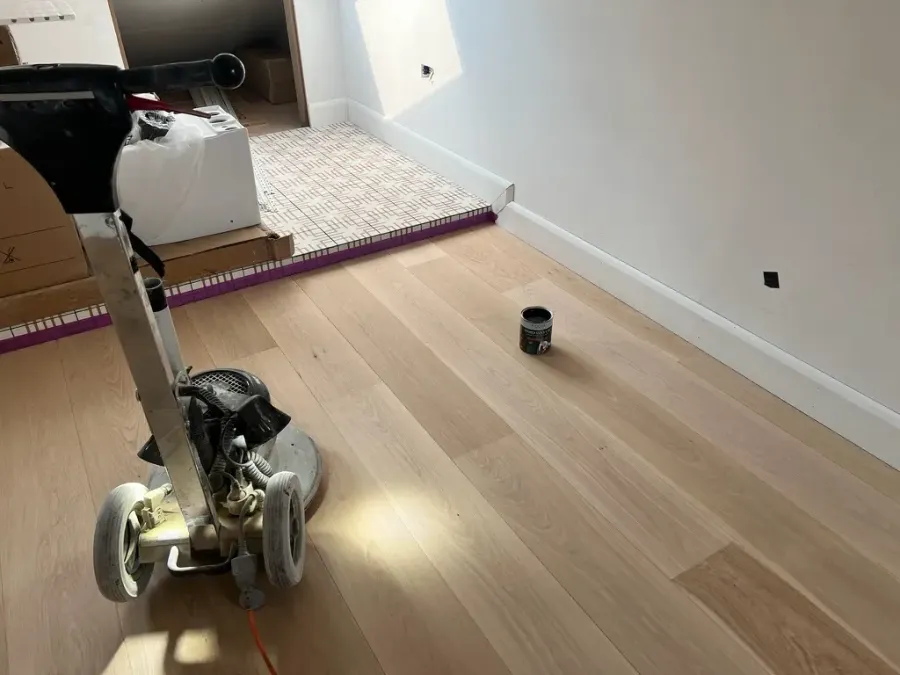
At the centre of dust-free sanding are advanced sanding machines connected to a powerful extraction system. As the sander removes the top layer of the wood floor, it pulls in the dust at the same time.
So instead of dust floating around the room, it is captured immediately.
I often explain it to homeowners like this. It is like vacuuming while you sand. Simple in idea, but incredibly effective.
Modern dust-free sanding systems use sealed hoses and dust collection systems to move sanding dust into secure containers. This helps prevent dust from escaping into the space.
Systems such as the Bona dust containment system are designed to capture even microscopic dust particles. These are the particles you cannot see but would otherwise breathe in.
And that is where the real value lies.
Traditional sanding methods release large amounts of wood dust into the air. This affects indoor air quality and can linger long after the sanding process is complete.
Dust-free wood floor sanding reduces the amount of airborne dust significantly. High-quality filtration systems can capture up to 99.97 percent of particles as small as 0.3 microns.
I once worked in a home where the homeowner had breathing issues. In the past, they would leave during sanding. With dust-free sanding, they stayed comfortably at home.
That moment stayed with me. It showed how much the industry has improved.
Compared to traditional sanding, dust-free floor sanding techniques greatly reduce the spread of dust.
Traditional sanding methods allow dust generated during sanding to travel throughout the home. It settles on furniture, curtains, and even inside vents.
Dust-free sanding systems control this from the start. They capture dust at the source and reduce the amount of dust in the air.
Less mess. Less stress. A far better experience overall.
If you want to explore the differences in more detail, take a look at dust-free vs traditional floor sanding.
| Pros | Cons |
| Significantly reduced airborne dust | Slightly higher cost |
| Cleaner home during and after work | Requires specialised equipment |
| Improved indoor air quality | Not completely dust-free |
| Better finish with less dust settling | Needs experienced professionals |
| Faster and easier cleanup | Not all providers offer it |
In my experience, the benefits speak for themselves.
Wood dust is not just a cleaning issue. It affects your air quality. Fine dust can stay in the indoor air and impact how you feel in your home.
Dust-free sanding helps reduce airborne dust and supports a healthier indoor environment.
After years in this trade, I can say this with confidence. Cleaner air changes everything.
Homeowners often notice the difference straight away.
There is no thick layer of dust settling across surfaces. No endless wiping. No surprise dust appearing days later.
It creates a cleaner experience from start to finish.
Dust plays a big role in how a floor turns out. When dust settles on a freshly sanded floor, it can affect the final finish.
With less dust in the air, the result is a cleaner wood surface and a smoother finish when you refinish the floor.
It is one of those small details that makes a big difference.
The sanding process itself is familiar, but more controlled.
The technique remains the same. The difference is in how we manage dust.
Let us be clear.
Dust-free sanding is best described as virtually dust-free. There will always be a small amount of dust generated, but the amount of fine dust is dramatically reduced.
In practical terms, this means:
Just a cleaner and more controlled sanding experience.
If you are planning floor refinishing, dust-free sanding is usually the best option.
It is especially useful if:
It is also ideal for parquet floor restoration and detailed hardwood floor work.
If you are considering this for your home, you can learn more about professional dust-free floor sanding services and how they are delivered with minimal disruption.
Over the years, I have learned that floor sanding is not just about the floor.
It is about the space people live in. The air they breathe. The comfort they feel in their home.
Dust-free floor sanding reflects a more thoughtful way of working. It respects both the floor and the environment around it.
At Silver Lining Floor Care, that belief guides everything we do. We aim to restore each wood floor with care, precision, and respect for the home it belongs to.
And in my experience, that is what truly makes the difference.
1. Bona – Clean Air Sanding
https://www.bona.com/en-gb/professional/installation-renovation/sanding/clean-air-sanding/
2. Bona – Dust-Free Sanding
https://www.bona.com/en-gb/homeowner/how-to/dust-free-sanding/
3. HEPA Filtration in Dustless Sanding
4. Health Benefits of Dust-Free Sanding
Frequently Asked Questions
Not completely, but it is virtually dust-free. Modern systems capture around 95–99% of dust at the source, leaving only a minimal amount of fine dust.
Yes, dust-free sanding provides cleaner air, less mess, and a better finish compared to traditional sanding methods, making it the preferred modern approach.
In most cases, yes. Because dust levels are significantly reduced, many homeowners can stay comfortably in their home during the sanding process.
Yes, it greatly improves indoor air quality by reducing airborne dust particles that would otherwise circulate throughout the home.
It can be slightly more expensive due to advanced equipment, but many homeowners find the cleaner process and better results well worth the investment.
Contact us for more information.