

 info@silverliningfloorcare.co.uk



Learn how to safely clean natural stone floors without etching or staining. From daily care to what to avoid.
Read more
Published on 06 Jun 2023
Short answer? Yes — and quite often, you should.
If your wooden floors still have their protective finish and you’re not dealing with deep damage, a good clean and a fresh coat can be all it takes to make them look loved again. Sanding is brilliant when it’s needed, but for many London homes and commercial spaces, it’s not the first step.
Think about it — skipping sanding means:
Far less disruption ⏳ – you’re not living with dust sheets and moving furniture for days.
A smaller bill 💷 – cleaning and recoating costs less than full sanding and refinishing.
Extra years in the bank for your floor 🌿 – you’re not removing any timber unnecessarily.
And when the day does come for a proper restoration, we can still do it — see our Wood Floor Restoration services for what that involves.
Dirt and grit are like sandpaper under your feet — each step wears the finish a little more. But worn-looking floors don’t automatically need sanding. A deep professional clean is often the smarter move to start with, especially if you want to:
Remove fine grit before it scratches through lacquer, oil, or hardwax oil.
Bring back some of the floor’s natural sheen.
Prep the surface for an extra protective coat.
For weekly upkeep, we’re big fans of a pH-neutral wood floor cleaner and a soft-bristle vacuum or microfibre mop. When it’s time for something more thorough, our Wood Floor Cleaning service uses gentle, professional-grade solutions and low-moisture machinery to lift ingrained dirt without risking the wood.
A clean floor is good — a clean floor with a healthy protective coat is even better.
Straight after a deep clean is the perfect time to apply a fresh layer of lacquer, oil, or hardwax oil. It’s a quick step that:
Protects against moisture, scratches, and stains.
Evens out the look.
Extends the time before sanding becomes necessary.
The timing matters. Wait too long and the finish will wear through to bare timber — and once that happens, sanding is unavoidable.
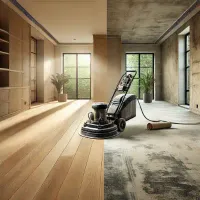
Sometimes, the finish is already gone, and the wood is starting to take the hits — moisture marks, rough texture, or patches of raw timber. At that point, cleaning won’t save it; you need sanding to bring it back.
Here’s when you know it’s time:
Dark or grey patches where moisture’s been absorbed.
Stains that won’t budge.
Rough or splintered texture underfoot.
Obvious colour differences between busy and quiet areas.
Sanding gets a bad reputation for “shortening a floor’s life”. Done badly, yes — but in the right hands, it’s precise, safe, and only removes the tiniest top layer of wood. Our dust-free sanding kit and careful grit sequence mean we take off just enough to refresh the surface and get it ready for a new finish.
You can read more here: Wood Floor Sanding and Refinishing in London.
|
Feature |
Professional Cleaning & Recoating 🧹 |
Full Sanding & Refinishing 🪵 |
|---|---|---|
|
Best for |
Light wear, surface dullness, ingrained dirt |
Deep scratches, bare timber, uneven surfaces |
|
Process |
Deep clean → buff → fresh topcoat |
Sand top layer → refinish |
|
Time |
1 day or less |
2–4 days |
|
Dust & disruption |
Minimal |
More (controlled) |
|
Cost |
Lower |
Higher |
|
Lifespan of results |
1–5 years |
7–10 years |
|
Impact on floor |
Preserves wood |
Removes a thin layer |
|
Ideal frequency |
Every 1–3 years |
Few times in lifetime |
💡 If you’re unsure, start with cleaning. If the colour doesn’t lift at all, it’s likely the finish has gone and sanding is next.
If your wooden floors in London are starting to lose their sparkle — whether it’s a Kensington townhouse hallway, a shop in Camden, or a family home in Hackney — you might be surprised at how much can be done without sanding.
Our professional wood floor cleaning is aimed at bringing back life and protection without removing any timber:
Removing grit and dust — Fine grit works like sandpaper underfoot. We vacuum with soft-bristle heads and use microfibre mops to lift debris from even the trickiest corners along skirting boards.
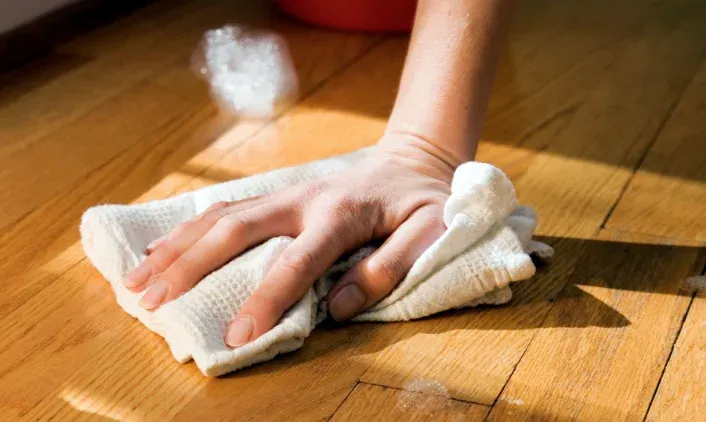
Gentle pH-neutral cleaning — We dampen (never soak) the mop, using a safe cleaner designed for wooden floors. This loosens dirt without damaging lacquer, oil, or hardwax oil finishes — no steam mops, vinegar, or harsh chemicals in sight.
Deep machine cleaning for heavy traffic areas — Perfect for hallways in Islington flats or busy restaurant floors in Shoreditch, this uses low-moisture scrubbers with safe alkaline cleaners to lift ingrained dirt from the grain.
Light buffing for a smoother finish — Where the floor allows, we carry out gentle buffing to refine the surface, reduce fine scuffs, and prepare it for a timely wood floor recoating.
Fresh protective coat — We finish with your choice of lacquer (for durability), hardwax oil (for a natural look with easy touch-ups), or traditional oil (for warmth and breathability).
The result? Floors that look brighter, feel smoother, and are ready to withstand daily life — all without the disruption of sanding.
💡 Tip: Whether it’s Victorian pine in Hampstead or contemporary oak in Chelsea, the secret is maintenance before wear reaches bare timber. That’s when cleaning turns into restoration.
Think of floor care like dental care — you wouldn’t skip brushing and just rely on the dentist every few years. A little, often, works wonders.
Regular pH-neutral cleaning.
Deep cleans when dirt builds up.
Recoating before wear reaches bare timber.
Checking high-traffic spots for dullness.
Once the finish is gone, moisture will get in, the wood will darken, and the cycle of repairs gets more expensive.
Maintenance Cleaning vs Deep Cleaning — Why little and often is better for floors, your health, and the planet.
Basics of Cleaning Everything — Our CHAT method for safe, effective cleaning.
Frequently Asked Questions – Cleaning Wooden Floors Without Sanding
If your floor’s dull but still has its protective finish, a deep clean and recoat is often enough. Signs that sanding might be needed include bare patches of timber, dark stains, rough texture, or colour differences between busy and quiet areas. If you’re unsure, we can carry out a quick floor assessment to advise the best route.
It can get surprisingly close. In many London homes, especially where the wear is surface-level, professional cleaning followed by a fresh topcoat can restore brightness, even out the sheen, and protect against further damage. Deep scratches or exposed timber will still require sanding.
For most London households, every 12–18 months is a good guide. In high-traffic areas such as hallways, kitchens, or commercial spaces like cafés in Shoreditch or shops in Camden, you may need deep cleaning and recoating more often.
Yes — we regularly work on Victorian pine, parquet, and other period floors across boroughs like Hackney, Islington, and Kensington. Our methods are gentle, low-moisture, and designed to preserve original timber wherever possible.
Light surface scuffs often buff out during the cleaning process. Deeper scratches that have gone through the finish into the wood may still be visible, but can be disguised somewhat with recoating. Full removal requires sanding.
Definitely. Cleaning removes dirt, but recoating adds the barrier that stops damage from happening in the first place. Without it, wear can reach bare timber much sooner — especially in busy London homes or commercial spaces.
Most jobs are completed in a single day, even for larger areas. Commercial or multi-room projects in boroughs like Westminster or Tower Hamlets can sometimes run longer, but we plan to minimise disruption.
If you are asking this question, the cleaning is not an option here. A full sanding and refinishing is needed.
Contact us for more information.